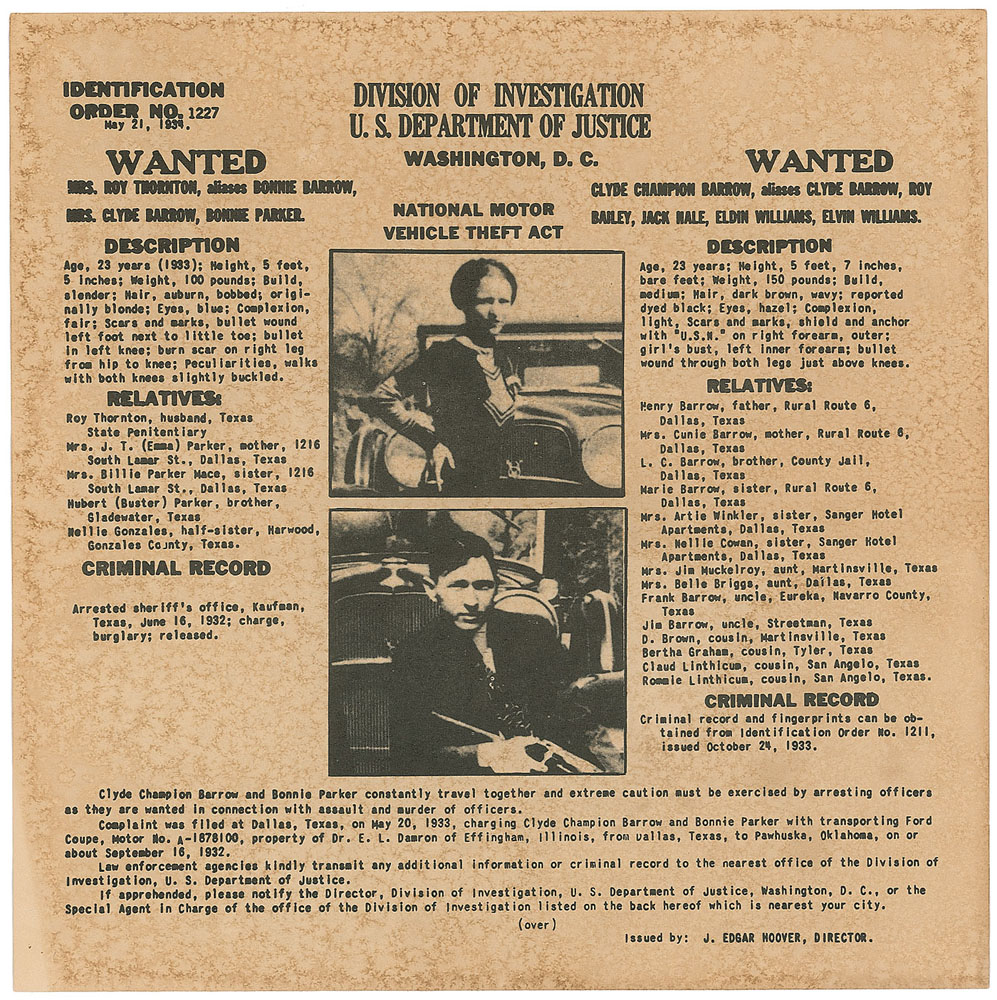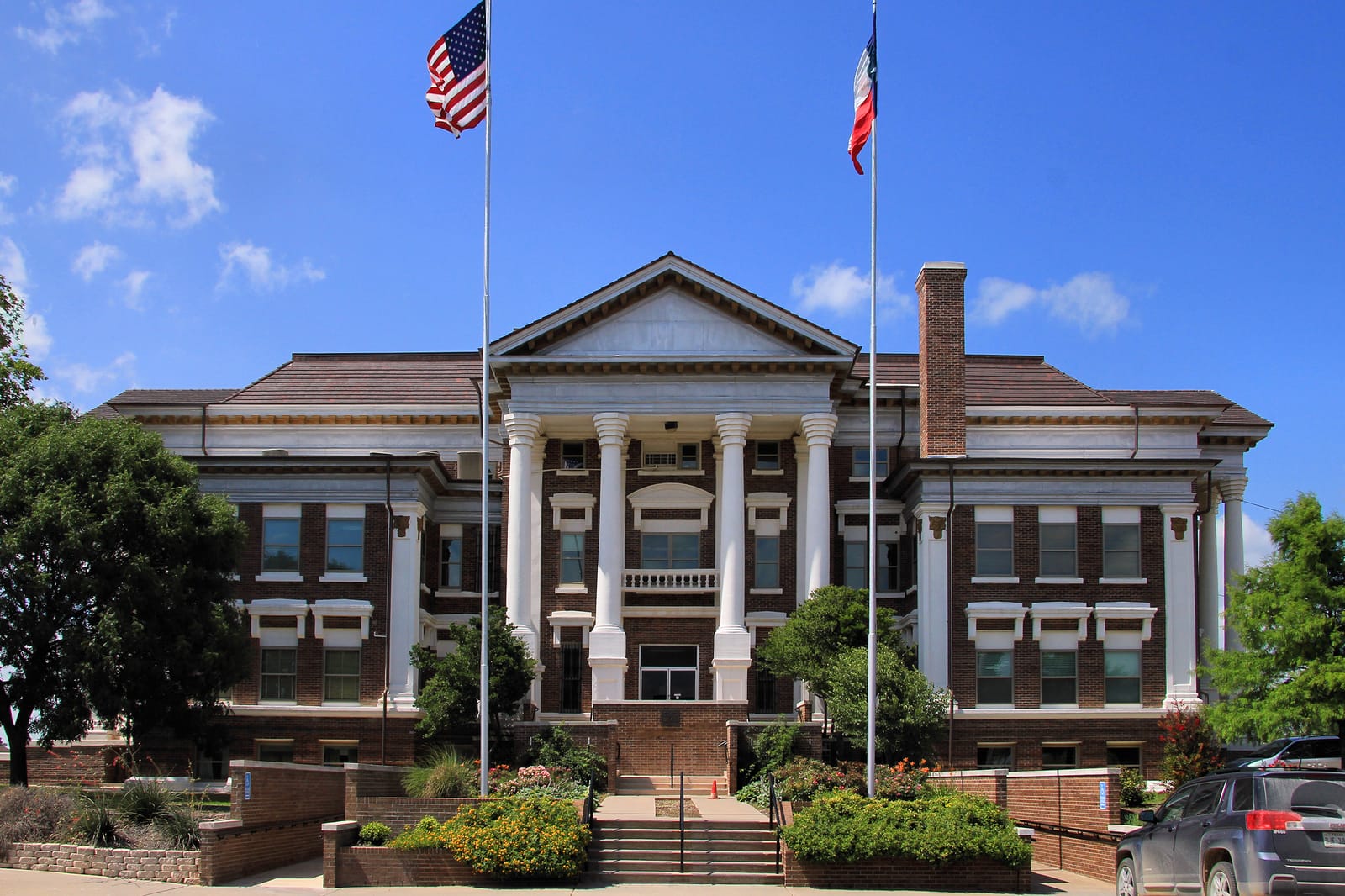
The Montague County courthouse has burned twice, been struck by tornadoes twice, and survived one countywide election that could have moved it to Bowie. The building standing today — a 1913 Classical Revival structure in the small town of Montague — is the sixth courthouse in the county’s history, the fifth built specifically for the purpose, and the first one that has lasted more than three decades without catastrophe.
That arc from log cabin to brick-and-stone Classical Revival covers sixty-five years and tells most of the county’s history by itself.
The First Courthouse: Log, 1858
When Montague County was organized in 1858, the commissioners built what frontier counties built: a log courthouse. Construction was fast, materials were local, and the result was modest by any standard. The county had a small population, limited tax revenue, and pressing concerns about survival — Comanche and Kiowa raids continued through this period — that made elaborate civic architecture an afterthought.
The log courthouse served the county through its first years. Specific records about its dimensions, interior arrangement, or exact replacement date are thin; the building itself left little trace in the surviving documentary record.
The Repurposed Store, the Frame Courthouse, and the Fire of 1873
Between the log courthouse and the frame building, the county appears to have used a repurposed store building for some period — a transitional solution that reflects the chronic gap between the county’s civic aspirations and its actual finances during the post-Civil War decade.
The frame courthouse that replaced it did not last. It burned in 1873, taking county records with it. Courthouse fires of this era were documentary catastrophes: deeds, court judgments, tax records, and the accumulated paper archive of a young county vanished in an afternoon. The county rebuilt quickly, but what was lost in the fire could not be recovered.
The Sandstone Courthouse, 1879–1884
The sandstone courthouse, constructed in 1879 at a cost of $22,000, represented a genuine step up. Sandstone construction — almost certainly using locally quarried material — was more durable than frame and signaled the county’s improving financial position after the cattle-drive era had generated tax revenue. The building had a solidity the frame structure never possessed.
It lasted five years.
On March 31, 1884, the sandstone courthouse burned in what was widely attributed to arson by cattle thieves seeking to destroy evidence in pending cases before the county courts. Whether the specific arsonists were ever identified and prosecuted is not confirmed in available sources; the county’s records on the investigation were themselves presumably lost in the fire that was the object of the arson. The circularity was perfect and devastating.
The 1884 fire was not simply a property crime. It was an attack on the legal infrastructure of the county — on the court records, deeds, and case files that documented who owned what and who owed what to whom. The thieves, if the attribution is correct, understood what they were doing.
The T.J. Jarrell Courthouse, 1885–1913
The county replaced the burned sandstone building quickly. The T.J. Jarrell courthouse, built in 1885 at a cost of $35,500, was a more substantial structure than either predecessor. Jarrell, the architect or contractor, is not extensively documented in accessible sources; the building itself became the county’s primary civic structure for the next generation.
It survived two close calls. A tornado on April 30, 1905 damaged the building. A second tornado on July 5, 1905 struck again. The twin 1905 tornado events — two major storms within a few months — were apparently enough to make clear that the Jarrell building’s useful life was nearing its end. By the early 1900s, a county that had grown from 890 residents in 1870 to more than 20,000 in the cotton-era boom needed something better.
The Current Courthouse, 1913
The 1913 courthouse is the county’s permanent answer to the problems of the previous sixty years. Constructed at a cost of $90,000 to $100,000 — roughly forty times the cost of the building it replaced in 1879 — and designed by architect George Burnett in the Classical Revival style, it was the most ambitious civic building MoCo had ever attempted.
Classical Revival was the dominant style for early-20th-century Texas county courthouses: symmetrical facades, central entrance emphasis, columns or pilasters, stone detailing, and a vertical presence that expressed civic authority. The style said, plainly, that this was an institution of permanence and confidence. In a county that had burned through five predecessors in sixty-five years, the message was deliberate.
The building’s original purposes were the full suite of county functions: courtroom, county clerk’s records storage, district clerk’s office, county judge’s chambers, tax assessor-collector offices, and sheriff functions. Modern renovations have updated it for accessibility, wiring, and climate control, but the building’s footprint and character are essentially those of 1913.
The 1913 courthouse was a product of the cotton-era prosperity that had transformed MoCo between 1880 and 1910. The county that could afford a $90,000 courthouse in 1913 was the same county whose cotton harvest peaked at 43,595 bales in 1914. When the cotton economy declined — particularly after the 1920s — the courthouse stood as a monument to a prosperity the county never fully recovered.
The 1984 County Seat Election
Courthouse history in Montague County did not end in 1913. The building’s continued existence in Montague — rather than in Bowie, the county’s largest city — has been contested.
By the early 20th century, Bowie had grown into the county’s commercial and population center, while Montague remained the small county seat town of a few hundred residents. The courthouse stayed in Montague for the oldest reason in Texas county government: it had been there since 1858, and the legal threshold for moving it is high.
In June 1984, the county held a formal election on whether to move the county seat from Montague to Bowie. Bowie received a majority of votes. But Texas law requires a two-thirds supermajority for a county seat change, and Bowie’s majority did not reach that threshold. Montague retained the courthouse.
The 1984 vote is a footnote in most accounts, but it matters for understanding the county’s modern civic geography: the population lives primarily in Bowie and Nocona, while the formal apparatus of county government — courts, clerk’s offices, commissioners’ meetings — operates from a town that would not be the county seat if the voters could agree to move it.
The Courthouse and the County Today
The 1913 courthouse anchors county government as described in County Government Today. The Commissioners Court meets in its chambers; the county clerk, district clerk, county judge, and other elected officials maintain offices there; deeds, marriages, probate records, and the accumulated paper trail of MoCo civic life are stored and accessible through its offices.
For genealogical researchers, the courthouse is the primary destination: deed records from the county’s organization in 1858, marriage and probate records, court judgments. The two courthouse fires (1873, 1884) created documentary gaps that can never be fully closed, but the records that survived those fires and the records accumulated since 1885 represent an irreplaceable county archive.
The Sheriffs of Montague County page documents the elected officials who have worked in and around the courthouse structure across its full history.
For the small town of Montague itself — population in the low hundreds, bypassed by railroads, dwarfed by Bowie — the courthouse is the essential reason the town exists at all. See Montague for the town’s full history.
Related pages: County Government Today · Montague (Town) · Sheriffs of Montague County · Modern Era Index
Sources: TSHA Handbook of Texas (“Montague County,” “Montague County Courthouse”); Mrs. W.R. Potter, History of Montague County (1913); Texas Historical Commission, Texas Historic Courthouse Preservation Program. George Burnett architect biography, T.J. Jarrell biography, and specific Texas Historic Courthouse Preservation Program status for MoCo require further research to confirm.