Montague County was not the center of the Texas outlaw story. But it sat at the edge of territory where the story was very much alive. The lawless decades from Reconstruction through the Great Depression — roughly 1865 to 1935, with peaks in the late 1870s and the 1930s — produced famous figures whose operations reached into north Texas, and anonymous figures whose crimes filled county court dockets for generations. Separating the documented record from the accumulated mythology is harder work than it might seem.
The basic shape is this: cattle and horse theft dominated MoCo’s outlaw era throughout the period, episodic bank robberies occurred as banking expanded into the county’s growing towns, and the named gangs of Texas outlaw legend — Sam Bass, the Doolin-Dalton network, Bonnie and Clyde — operated in regions that border or overlap Montague County without always leaving specific MoCo evidence. Popular storytelling has sometimes filled that evidentiary gap with stories the primary sources don’t sustain.
The Era’s Dominant Crime: Livestock Theft
Before bank robbery and train robbery captured the public imagination, the dominant outlaw activity in Montague County was cattle theft and horse theft. Both operated throughout the entire post-Civil War period and persisted well into the 20th century.
The mechanics were straightforward: stolen cattle were driven north across the Red River into Indian Territory, where county jurisdiction ended and pursuit became complicated. Stolen horses moved faster and farther — a good horse could cover substantial ground before any alarm was raised. Brand alteration was a standard technique, burning or cutting a new mark over an existing one to obscure ownership. County court records, where they survive, document case after case.
The Texas Rangers’ Frontier Battalion (1874–1901) was specifically organized to address this kind of endemic lawlessness in north Texas. Rangers pursued cattle thieves as a routine function. County sheriffs in MoCo organized posses for the same purpose from the county’s organization in 1858 onward. The work was dangerous, unglamorous, and largely unrecorded in the popular press that remembered gunfighters and gang leaders.
Sam Bass and North Texas
Sam Bass (1851–1878) is the most romanticized outlaw of the Texas period. Born in Indiana, Bass arrived in Texas in the 1870s and assembled a gang that specialized in train robberies. His most famous operations were the Big Springs, Nebraska robbery (1877), the Eagle Ford robbery, and the Mesquite robbery — all documented in the TSHA Handbook of Texas. The Texas Rangers caught up with him at Round Rock on July 21, 1878, where he was killed in an ambush.
Bass’s primary operations ran through Denton County and northeast Texas, not MoCo. Whether Bass’s gang specifically operated in Montague County is uncertain. Local lore in many Texas counties claims Bass connections that have not survived verification against primary sources. MoCo’s specific Bass connections, if any existed, require primary research in contemporary newspaper accounts and court records before they can be stated with confidence.
The Bass mythology is real; the MoCo chapter of that mythology needs more documentation than it currently has.
The Doolin Gang and Indian Territory
Bill Doolin (1858–1896) led the Wild Bunch — also called the Doolin-Dalton gang — through a series of bank and train robberies in Oklahoma Territory and surrounding states in the 1890s. Doolin’s operations centered on Indian Territory (modern Oklahoma), just across the Red River from MoCo. He was killed at Lawson, Oklahoma, on August 25, 1896.
The geographic proximity matters: Indian Territory was a recognized outlaw refuge, where U.S. Marshals had jurisdiction but state law enforcement did not. Criminals who operated in north Texas often retreated across the Red River when pursued. Some Doolin gang operations were plausibly close to MoCo; specific operations in the county require verification in TSHA records and Oklahoma archives.
The 1884 Bowie Bank Robbery: A Legend the Sources Don’t Support
A persistent local narrative references a bank robbery in Bowie in 1884. The story is specific enough to have circulated through county folklore for generations.
Mrs. W.R. Potter’s 1913 History of Montague County — the closest thing to a contemporary primary source for this era — is explicit: Bowie had no bank in 1884. The first bank in Montague County was established at Montague (the county seat), not Bowie. A town without a bank cannot have had a bank robbery.
The “1884 Bowie bank robbery” is a documented example of a story that does not survive contact with primary sources. It may be a conflation with other regional events, a garbled retelling of something that happened nearby, or simply invented tradition. The caution it requires applies broadly: outlaw stories in frontier counties accumulated through oral tradition, local boosterism, and later-era romanticization before anyone checked the records. Skepticism toward unverified outlaw narratives is appropriate.
The 1884 Courthouse Fire: A Real Crime Misattributed
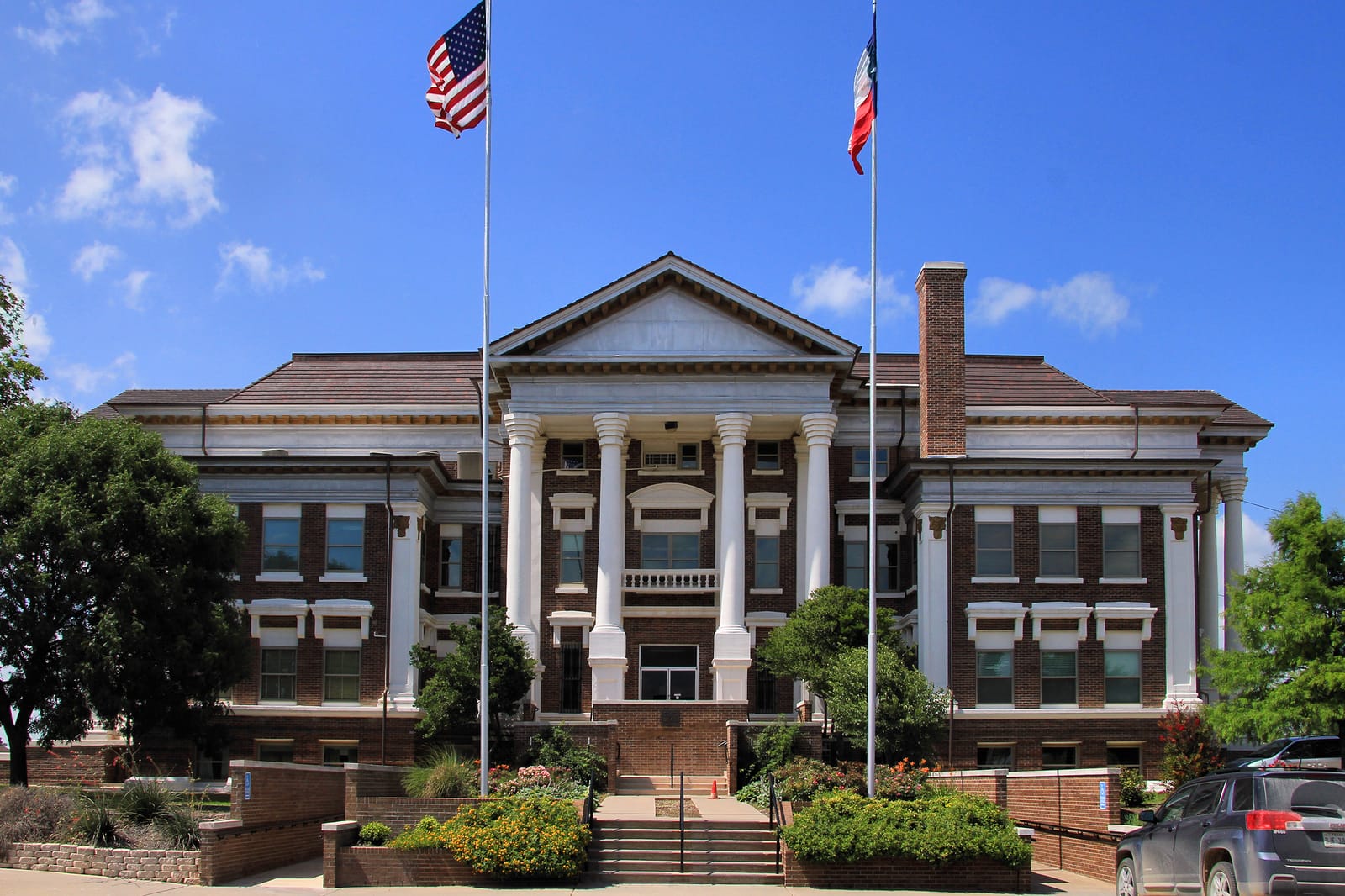
What did happen in 1884 was arguably more dramatic than any bank robbery: the sandstone courthouse in Montague was burned on March 31, 1884, in a fire attributed to arson by cattle thieves seeking to destroy evidence in pending cases. County records and legal files went up with the building.
The cattle-thief arson connects to the broader pattern: livestock theft was serious business, the criminal networks involved were organized enough to plan and execute courthouse destruction, and the loss of records created its own lasting damage to MoCo’s documentary archive. For historians, every courthouse fire is a documentary catastrophe that leaves gaps in the record that can never be fully closed.
See Courthouse History for the full multi-generation building sequence.
Depression-Era Outlaws
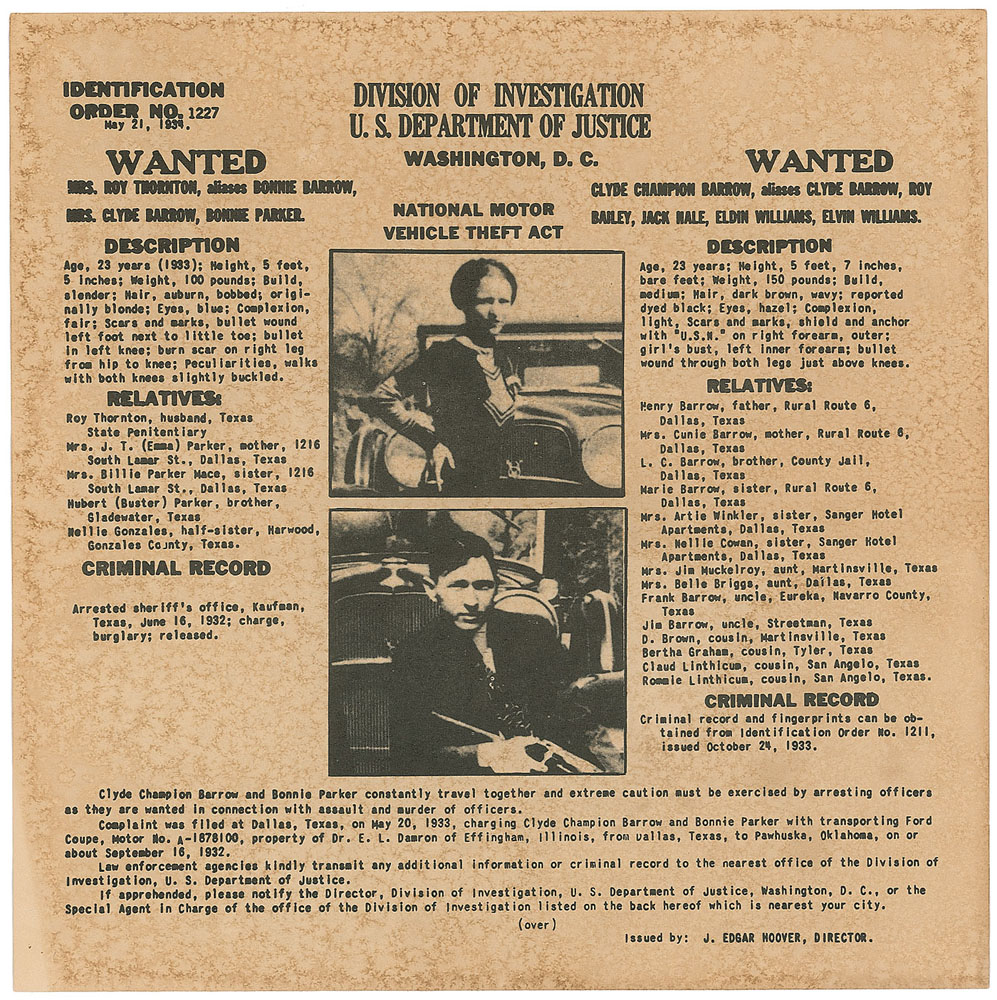
The 1930s produced a second flowering of outlaw mythology in Texas. Bonnie Parker and Clyde Barrow were active from 1932 to 1934, committing bank robberies, gas station holdups, and killings across Texas, Oklahoma, Missouri, and neighboring states. They were killed in a Louisiana ambush on May 23, 1934.
Their home base and primary operations were in the Dallas-Fort Worth area, further south and east of MoCo. Whether they specifically robbed or traveled through Montague County is uncertain; their operational territory is broadly documented by TSHA but specific MoCo incidents remain unverified.
John Dillinger, active in the Midwest in 1933–1934, operated far north of Texas; any MoCo connection is essentially nonexistent. Other Depression-era figures — Pretty Boy Floyd, Machine Gun Kelly, Baby Face Nelson — operated primarily outside north Texas.
What is plausible for MoCo in the 1930s: small-town bank robberies at the county’s emerging banks, cattle theft continuing under Depression-era economic pressure, and bootlegging operations that intersected with the county’s Prohibition-era economy. These were crimes committed by local and regional figures, not the famous gangs whose names now carry the period’s mythology.
Law Enforcement and the Myth of Frontier Justice
The story of outlaws cannot be told without the story of those who pursued them. Three layers of law enforcement applied to MoCo through this era:
Texas Rangers were the most visible. The Frontier Battalion (1874–1901) specifically organized north Texas Ranger operations against lawlessness. Rangers’ mobility and state authority made them effective against organized gangs that crossed county lines. Sam Bass was killed by Rangers. The Ranger role in MoCo is documented in the Texas Rangers page.
County sheriffs operated continuously from the county’s organization. Each elected sheriff ran a small department with deputies, organized posses when needed, and coordinated with Rangers and other county officers. Specific named MoCo sheriffs and their crime-fighting records are documented in the Sheriffs of Montague County roster.
Federal authorities — U.S. Marshals in Indian Territory, and later the FBI (formally organized as such in 1935) — addressed crimes that crossed jurisdictional lines. The Red River border made federal-state cooperation a regular necessity.
The “frontier justice” mythology — vigilante committees, extralegal hangings, mob action — was also real in MoCo during the frontier era, as documented in Reconstruction Violence. Formal law enforcement gradually replaced extralegal action through the late 19th and early 20th centuries.
Mythology and the Documentary Record
The outlaw era generated a body of folklore that outlasted and sometimes replaced the documentary record. Sam Bass songs and ballads circulated through Texas folk tradition for generations. The “Robin Hood” mythology — noble outlaws stealing from the rich to give to the poor — attached itself to Bass and later to Bonnie and Clyde, inverting the actual moral character of their crimes. Family stories of outlaw connections proliferated; grandsons and great-nieces of people who had nothing to do with famous gangs became related, at least in oral tradition.
Modern historiography has grown more critical of this mythology. The victims of outlaw violence — bank tellers, bystanders, rival criminals — were ordinary people with no memorial ballads. The cattle and horse theft that dominated MoCo’s outlaw era injured farmers and ranchers operating on thin margins; the livestock they lost was sometimes the difference between survival and failure. The romance of the outlaw era is a story that history tells about itself, not a story the evidence fully supports.
What the evidence does support: Montague County’s outlaw era was real, its crimes consequential, and its law enforcement response a formative part of county institutional history. The documentation to tell that story in full — newspaper microfilm, county court records, sheriff office archives — remains largely unexamined.
Related pages: Prohibition and Moonshine · Texas Rangers in Montague County · Modern Era Index
Sources: TSHA Handbook of Texas (“Bass, Sam”; “Doolin, William”; “Barrow, Clyde Champion”; “Parker, Bonnie Elizabeth”); Mrs. W.R. Potter, History of Montague County (1913). Regional outlaw patterns are well-documented in these sources; MoCo-specific incidents are documented incompletely and remain outstanding research questions pending local newspaper and court record research. 1884 Bowie bank robbery assessed as not supported (Potter 1913).