The decade after Appomattox was, for north-central Texas, among the most disordered periods in living memory. For Montague County specifically, the years from 1865 to roughly 1876 brought two distinct violence layers simultaneously: continuing Comanche and Kiowa raids pressing in from the west, and Reconstruction-era political, personal, and racial violence erupting from within Anglo-Texan society itself. Neither threat alone would have been easy to manage. Together, they made this one of the most genuinely chaotic periods in the county’s documented history.
Source note: General Reconstruction-era dynamics in Texas are well documented in scholarly literature and TSHA sources. Specific violent incidents in Montague County during this period are unevenly preserved; this spoke draws on available regional sources. Freedmen’s Bureau records for the Sherman and Gainesville sub-districts — the primary-source layer for Black Texan experience in MoCo through this period — are held in NARA M1912 microfilm and have not been accessed. That gap is disclosed throughout.
What Was the Context for Reconstruction in Texas?
The standard periodization of Texas Reconstruction runs from June 1865 — when federal troops arrived and emancipation took effect on Juneteenth — through roughly 1873, when a Democratic state government formally ended the Republican Reconstruction administration. For Montague County, however, the practical frontier of disorder extended to about 1875–1876, when two concurrent processes finally resolved: Comanche and Kiowa peoples were forced onto reservations, ending the raid era, and the county’s formal legal system became stable enough to adjudicate even serious violence through courts rather than community enforcement.
The political architecture of Texas Reconstruction placed the state under federal military authority from 1865 through 1870, then through a brief period of Radical Republican state government under Governor Edmund Davis (1870–1874), and then under the Democratic “Redeemer” government after January 1874. Each transition carried its own violence.
The Republican-era Texas State Police (1870–1873) — an integrated law-enforcement force that included African American officers — was one of the most controversial institutions of the period. Created specifically to enforce state law in areas where county sheriffs were unable or unwilling to act, the State Police conducted operations across north Texas. Their effectiveness was mixed: documented successes against outlaw activity existed alongside documented abuses and deep resistance from former-Confederate communities that viewed the force as an instrument of political occupation. Their disbanding in 1873, when Democrats took the governorship, removed whatever protection they had provided to freed people and Unionist communities in north Texas.
What Did Continuing Raids Mean for MoCo During Reconstruction?
The standard historical periodization of “Reconstruction” sometimes treats it as an eastern-Texas phenomenon, focused on political contests between freedmen, Unionists, and former Confederates. In Montague County, that framing misses the dominant fact on the ground: raids continued.
Comanche and Kiowa war parties kept pressing into the county through the late 1860s and into the early 1870s. The 1863 Illinois Bend raid — the most devastating single Indigenous military action in the county’s documented history — had left deep scars and accelerated outmigration. By 1867, Comanche-Kiowa pressure had driven most settler families eastward; Montague County’s population was effectively at a nadir. The county was not recovering through the height of Reconstruction — it was emptying.
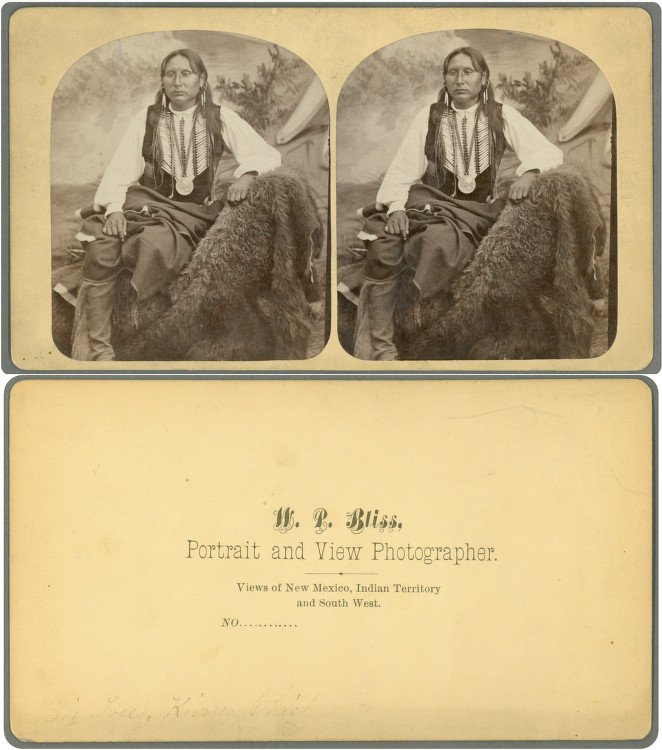
Federal Indian policy through this period was inconsistent. The Medicine Lodge Treaty (1867) promised to confine Comanche and Kiowa peoples to a reservation in Indian Territory, but raids continued for years afterward. Settlers who remained in Montague County did so within a framework of community defense — watch rotations, fortified structures, mutual-aid pursuit after attacks — rather than any reliable state or federal protection.
The result was a county where two parallel orders of violence ran simultaneously and sometimes intersected: Anglo-on-Anglo political and personal violence driven by Reconstruction-era grievances, and Indigenous-on-Anglo raid violence driven by a thirty-year resistance pattern. The state structures designed to manage either were thin to nonexistent.
What Forms Did Post-War Lawlessness Take in MoCo?
Beyond the continuing raid pattern, Reconstruction-era Montague County saw several forms of internal disorder:
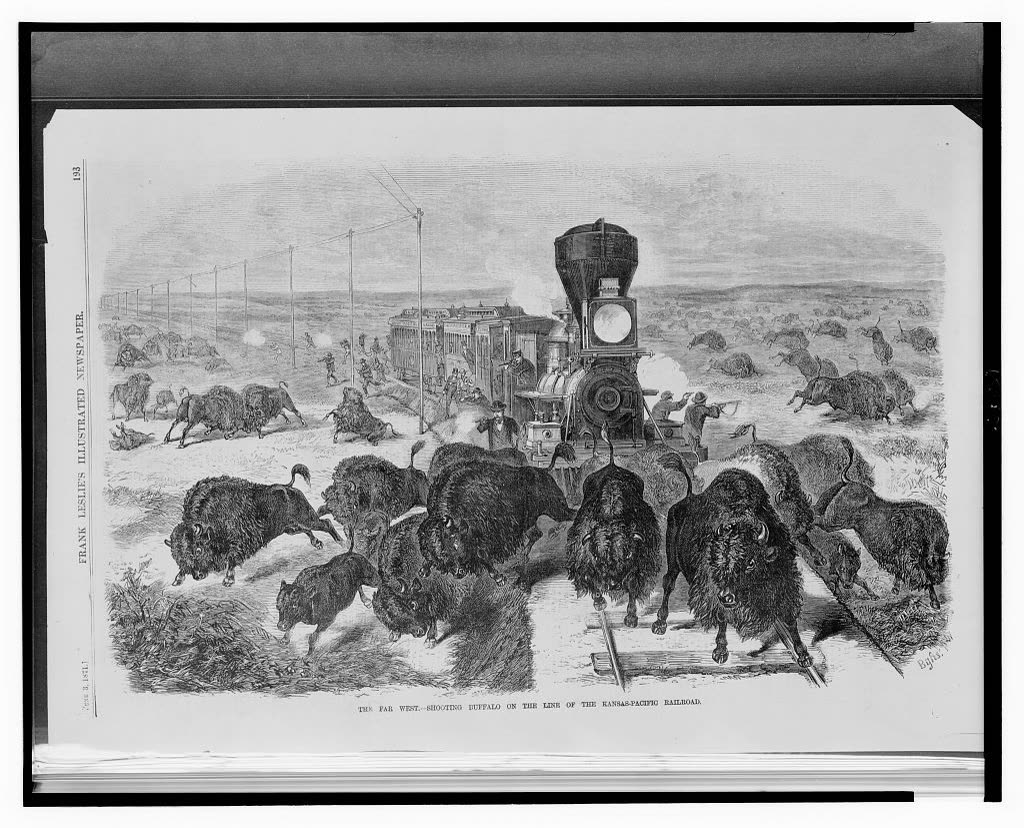
Cattle and horse theft escalated as the Chisholm Trail era began in 1866. Livestock was the county’s primary mobile wealth, and theft — by organized gangs, opportunists, and some Indigenous parties who still crossed the Red River — was a continuous drain. Vigilance committees and community pursuit parties operated when county law enforcement was absent or unavailable. The line between legitimate self-defense, organized vigilantism, and extrajudicial violence was not always clear.
Outlaw activity moved through north Texas during this period. Sam Bass — the most famous Texas outlaw of the era — operated primarily further east and north, but the broader north-Texas outlaw economy of the 1870s touched Montague County as a corridor and sometimes a target. Specific outlaw incidents with MoCo documentation are covered in the modern-era bank-robberies-and-outlaws spoke.
Personal and political feuds rooted in Civil War-era loyalty disputes, land competitions, and family grievances produced violence across post-war Texas. Specific MoCo feuds from this period are likely documented in local family histories and county court records but are not prominent in the published regional sources available.
Vigilante incidents — lynch mobs, ad hoc justice — occurred across post-Reconstruction Texas at documented scale. Cooke County’s Great Hanging of 1862 (41 men killed in a single week during Civil War unionist suppression, adjacent to MoCo) is the best-documented regional vigilante event; comparable post-war incidents in MoCo specifically would require primary-source archival research to document.
What Was the Experience of Freed People in MoCo During Reconstruction?
The 1860 census recorded 34 enslaved persons in Montague County — a small number reflecting the county’s marginal position within the plantation economy. After Juneteenth 1865, those 34 individuals and their families entered a post-emancipation world that Texas’s Reconstruction government was only partially equipped to support.
The Freedmen’s Bureau — the federal agency tasked with managing the transition from slavery — had a thin presence in north Texas. Its Sherman and Gainesville sub-districts covered the broader region, but the bureau’s documentation of specific MoCo events and the economic and safety outcomes of freed people in the county is held in NARA M1912 microfilm (accessible through TSLAC or NARA Fort Worth). These records — contracts, correspondence, and incident reports documenting labor arrangements, land acquisition attempts, family formation, and encounters with violence — have not been accessed. The absence of documentation here is not evidence of absence of incident.
What is documented at the regional level: Texas Reconstruction was generally more hostile to freed people than some other former Confederate states. White-on-Black violence was widespread across the state through the Reconstruction period. The State Police’s integrated composition was in part a response to the inadequacy of all-white local law enforcement in protecting freed people’s basic security.
In MoCo, with a small freed population and a county deeply aligned with Confederate memory, the conditions for freedmen’s economic advancement and physical safety through Reconstruction were not favorable. The specific shape of that experience — the names, the land tenure attempts, the encounters with violence or with neighbors who offered protection — requires the Freedmen’s Bureau records that remain unread.
What Is the England Family Case, and Why Does It Matter?
The most-documented violent incident from the close of the Reconstruction era in Montague County is the 1876 England family murders — technically occurring after formal Reconstruction ended but representing the period’s moral endgame.
In August 1876, Methodist minister William England, his wife Selena, and two of her children were murdered in their Montague County home. The case became regionally significant not just for its horror but for its resolution: Selena England survived long enough to give a deathbed identification of the accused — a neighbor and two associates. What followed was five trials, five appeals to the Texas Court of Appeals, and eventual life sentences for three men. Five Texas governors were involved in various aspects of the case across its long legal history.
The England murders matter for the Reconstruction-era story precisely because of how they were handled. A comparable killing in 1863 or 1868 might have been resolved by a lynch mob, a family feud, or simply left unresolved as community authority collapsed under raid pressure. In 1876, it went through the formal legal process — five times. That institutional persistence, however imperfect, marks the difference between the raw frontier era and the post-Reconstruction order beginning to take hold.
The England murders are covered in fuller detail in the montague place spoke. They share a symbolic date with another MoCo milestone: 1876 was also the year Daniel Montague, the county’s namesake, died. The county he had helped establish was, in that year, finally developing the legal infrastructure to handle its worst violence without descending into extrajudicial alternatives.
How Did Reconstruction End in Montague County?
The Reconstruction era in MoCo closed through two convergent processes, roughly 1874–1876:
The raid era ended. The Red River War of 1874 — a coordinated US Army campaign across the southern Plains — broke organized Comanche-Kiowa resistance. Col. Ranald Mackenzie’s September 1874 destruction of the horse herds and supply camps at Palo Duro Canyon was the decisive blow. By June 1875, the final Quahadi Comanche bands had surrendered. By 1876, Comanche and Kiowa peoples were confined to reservations in Indian Territory. The threat that had emptied Montague County in the 1860s and suppressed its recovery through the early 1870s was over.
The political transition completed. Governor Richard Coke’s Democratic administration (1874–1876) had firmly ended the Republican Reconstruction period. The Texas State Police was already disbanded. County government in MoCo was stable and functioning under Democratic leadership aligned with the former-Confederate majority.
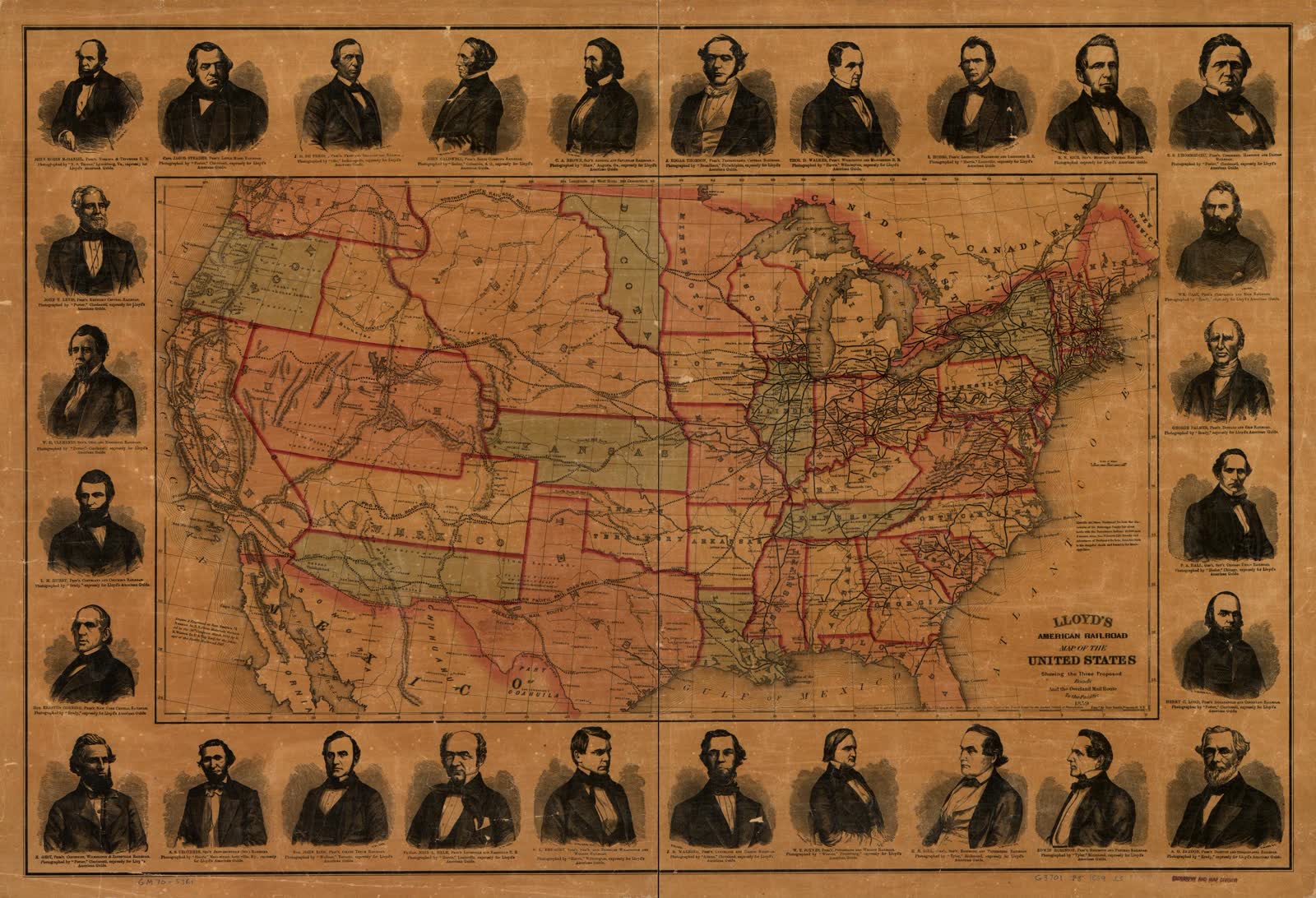
Population began recovering. Abandoned homesteads were reoccupied. Families that had left the county in the 1860s began returning, or new settlers arrived to take up land that had been sitting empty. The cattle drives were at their peak through 1875, providing economic momentum. The railroad — which would arrive in Bowie in 1882 — was still years away, but the direction of the county had turned.
What Is the Legacy of Reconstruction in Montague County?
The Reconstruction era left several layers of legacy that extended into MoCo’s 20th-century development:
Lost Cause memory. The post-Reconstruction period saw deliberate cultural politics aimed at rehabilitating the Confederacy. In MoCo, the Bowie Pelham Camp, No. 572, United Confederate Veterans — organized 1895, 102 members at peak, with 27.5 acres east of Bowie dedicated to reunion infrastructure — was part of this regional and national pattern. The camp’s establishment came alongside the systematic disenfranchisement of Black Texans through the 1902 poll tax, and the entrenchment of Jim Crow social order that defined the county through the mid-20th century.
African American history gap. The thinness of documentation for Black Texan experience in MoCo through Reconstruction — a consequence of both small population and systematic record-keeping exclusions — is itself a historical fact. The Freedmen’s Bureau records at NARA M1912 represent the primary remediation path.
Texas Rangers and frontier justice. The Frontier Battalion Rangers arrived in 1874 just as the raid era was ending, and their post-raid role shifted to outlaw pursuit and local law enforcement support. That transition — from frontier defenders to law-enforcement agents operating within a formal legal system — mirrors MoCo’s broader Reconstruction-era passage from disorder to institutional stability.
Related Pages
- Civil War on the Frontier — the 1861–1865 conditions that preceded Reconstruction’s disorder
- Texas Rangers in Montague County — the Frontier Battalion’s role in the 1874–1880 transition