Before Montague County had a courthouse, a cotton gin, or a post office of its own, a federal mail coach was running through its region twice a week.
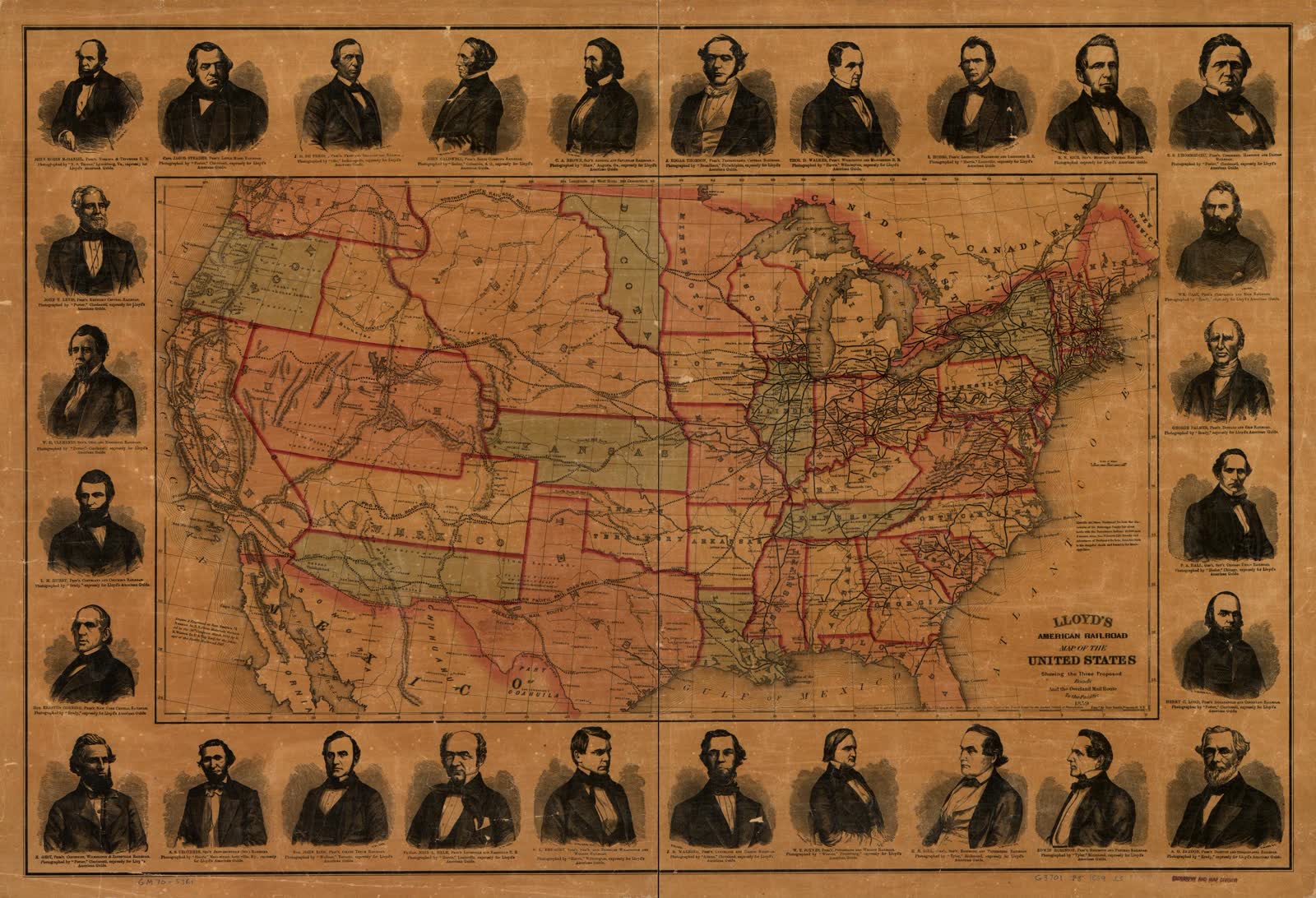
The Butterfield Overland Mail began service on September 15, 1858, following the southern arc of what critics called the “oxbow route” — down from St. Louis through Arkansas, across Texas, through the Trans-Pecos desert, into New Mexico and Arizona, and north to San Francisco. The route covered roughly 2,800 miles and promised delivery in 25 days each way: a revolutionary compression of the continent for the 1850s, when sending a letter from Missouri to California by sea took months.
The route’s Texas segment crossed what is now Montague County’s region. The stage line entered Texas from Indian Territory near the Red River, moved west through Cooke County, and continued into the Jack County corridor on its way toward Fort Belknap and ultimately El Paso. Anglo settlement of Montague County was minimal at this point — the county had been formally organized in 1857, with a population of only 849 by the 1860 census — and the stage route passed through largely open country that would only fill in with settlers through the following two decades.
For roughly 30 months, until the Civil War ended it, the Butterfield line was the first institutional presence the federal government had in this part of North Texas.
A note on the route and Montague County. The Butterfield line’s exact path through this immediate area is not fully settled in the sources. The nearest named station with a confirmed location — Davidson’s Station — was in neighboring Cooke County, and no station inside present-day Montague County has been confirmed by name and location in available records. What the documentary record supports is that the southern route passed through this corner of North Texas; whether it touched MoCo soil and where remains an open primary-research question. Read what follows as route-corridor context, not confirmed in-county fact.
The Route
Origins of the contract
On March 3, 1857, Congress authorized a federal subsidy for overland mail service connecting the Mississippi Valley to California. After competitive bidding, the contract went to John Butterfield and his newly formed Overland Mail Company. The annual subsidy was $600,000 — a substantial federal investment that reflected both the economic value of reliable transcontinental communication and the political urgency of connecting California, admitted as a state in 1850, to the rest of the Union.
The southern route was chosen over northern alternatives because the Rocky Mountain passes were blocked by snow in winter. The “oxbow” arc through Texas was longer in distance but passable year-round — a practical requirement for scheduled service.
Through the MoCo region
The Butterfield route entered Texas from Indian Territory at a Red River crossing, moved west through Cooke County, and continued toward Jack County and beyond. The stage line’s relay station network placed stops every 15 to 25 miles for fresh horses and driver changes, with larger “home stations” every 50 to 100 miles for meals and longer stops.
The specific station serving the Montague County corridor has not been positively identified in currently available sources. Research indicates that Davidson’s Station — the most frequently cited stop in this region — was located on Williams Creek just northeast of Rosston in Cooke County, not Montague County. Whether any relay stop specifically fell within MoCo’s present-day county boundaries is an outstanding research question requiring county-level primary source verification: the Conkling and Conkling Butterfield Overland Mail station atlas, the Montague County Clerk’s records, and the local historical society are the designated sources for that confirmation.
What is supported by general route documentation is that the Butterfield stage passed through or immediately adjacent to the Montague County region as it moved west from Gainesville toward Jacksboro. The pre-settlement landscape it crossed — open Cross Timbers prairie, Red River tributary drainages — was the same ground that Montague County settlers would begin farming in the 1860s and 1870s.
Daily Operations on the Route
A coach through Comanche country
Operating a stage line through this corridor in 1858–1861 meant operating through what Anglo-Texan settlers understood to be active Comanche territory. Montague County’s settlement was barely established; the county seat, military infrastructure, and civic institutions that would define the region through the 1880s did not yet exist. The stage route’s crew and passengers passed through country where Comanche raiding parties were a constant seasonal presence.
Butterfield stations across the Texas segment were periodically attacked:
- Stock theft — horses and mules, which had significant value and were easily driven
- Direct attacks on stations and coaches
- Killings of station personnel and passengers
- Defensive practices included thick walls with gun ports on station buildings, armed conductors on coaches, and communication networks among stops
The specific incident record at stations in the MoCo corridor has not been confirmed from primary sources.
What a passenger experienced
A Butterfield passenger traveling west from St. Louis in 1858 or 1859 would have reached the Texas frontier after crossing Arkansas and the Red River. The coaches were Concord stagecoaches — the classic Western vehicle, roughly 3,000 pounds, carrying nine passengers inside and additional seats on the roof, suspended on leather thoroughbraces rather than metal springs. Passengers paid $200 for the St. Louis to San Francisco through fare — equivalent to several months’ wages for most working people.
Through North Texas, the journey was relentless: a fresh team of horses at each relay stop, no stop longer than necessary for the team change and a few minutes of passenger rest, dust and discomfort predominant. The schedule demanded 100-plus miles per day, 24 hours of operation, with drivers working in shifts.
Personnel
A typical stop in the MoCo region would have been staffed by:
- A station agent — resident operator who lived on site, often with family
- Hostlers — horse handlers who kept teams ready for swaps
- A cook or station tender at larger stops
- Rotating drivers who took over the coach at regular intervals
- A conductor (also called a “through agent”) who supervised mail and passengers across multiple stages
Why the Route Ended
The Civil War
Texas voted to secede from the Union on February 23, 1861. With secession came the end of the Butterfield contract. The federal government would not continue paying $600,000 annually to run a mail route through Confederate territory. On March 1, 1861, Butterfield service on the southern route ended — 30 months after it had begun.
Equipment was relocated north, to routes that remained in Union-controlled territory. Station structures were abandoned. The coaches, horses, and mail bags that had maintained the transcontinental connection disappeared from the Texas corridors.
The railroad made it obsolete anyway
Even had the Civil War not intervened, the Butterfield route’s days were numbered by technology. The transcontinental telegraph was completed in October 1861, eliminating much of the urgency for fast mail communication. The transcontinental railroad, completed in May 1869, replaced overland passenger and mail service entirely. The stagecoach era was a transitional technology — essential in its moment, obsolete in the decade that followed.
The MoCo Legacy
The Butterfield route’s significance for Montague County is not primarily operational — the stage ran here for only 30 months, and the county barely existed as a settlement yet. Its significance is as a precedent: the first piece of formal federal infrastructure to cross this region was a mail route, built before the county had anything else of institutional substance.
The same geographic corridors the Butterfield coaches traveled — the prairie strips between the Cross Timbers, the Red River tributary drainages — were the corridors that later carried cattle drives, and later still the railroad that arrived in 1882 and transformed the county’s economy. The Butterfield route established that this part of Texas was crossable on a schedule, that the Red River corridor was a viable through-route, and that the federal government had reason to invest in the region’s connectivity.
A handful of Butterfield-era station sites along the Texas segment are commemorated by Texas Historical Commission markers. Whether a marker exists specifically within Montague County’s boundaries is an outstanding research question for the county historical commission and the THC marker database.
Related pages: Red River Station History · The Civil War on the Frontier · Texas Rangers in Montague County · Frontier Era Index
Sources: TSHA Handbook of Texas (“Butterfield Overland Mail,” confirmed: September 15, 1858 start; March 1, 1861 end; $600,000 annual subsidy); Texas Historical Commission, “Historical Markers”; Conkling and Conkling, The Butterfield Overland Mail 1857–1869 (station atlas). MoCo-specific station location has not been confirmed in available sources and remains an outstanding research question requiring county-level primary source verification.