The First Permanent Structure
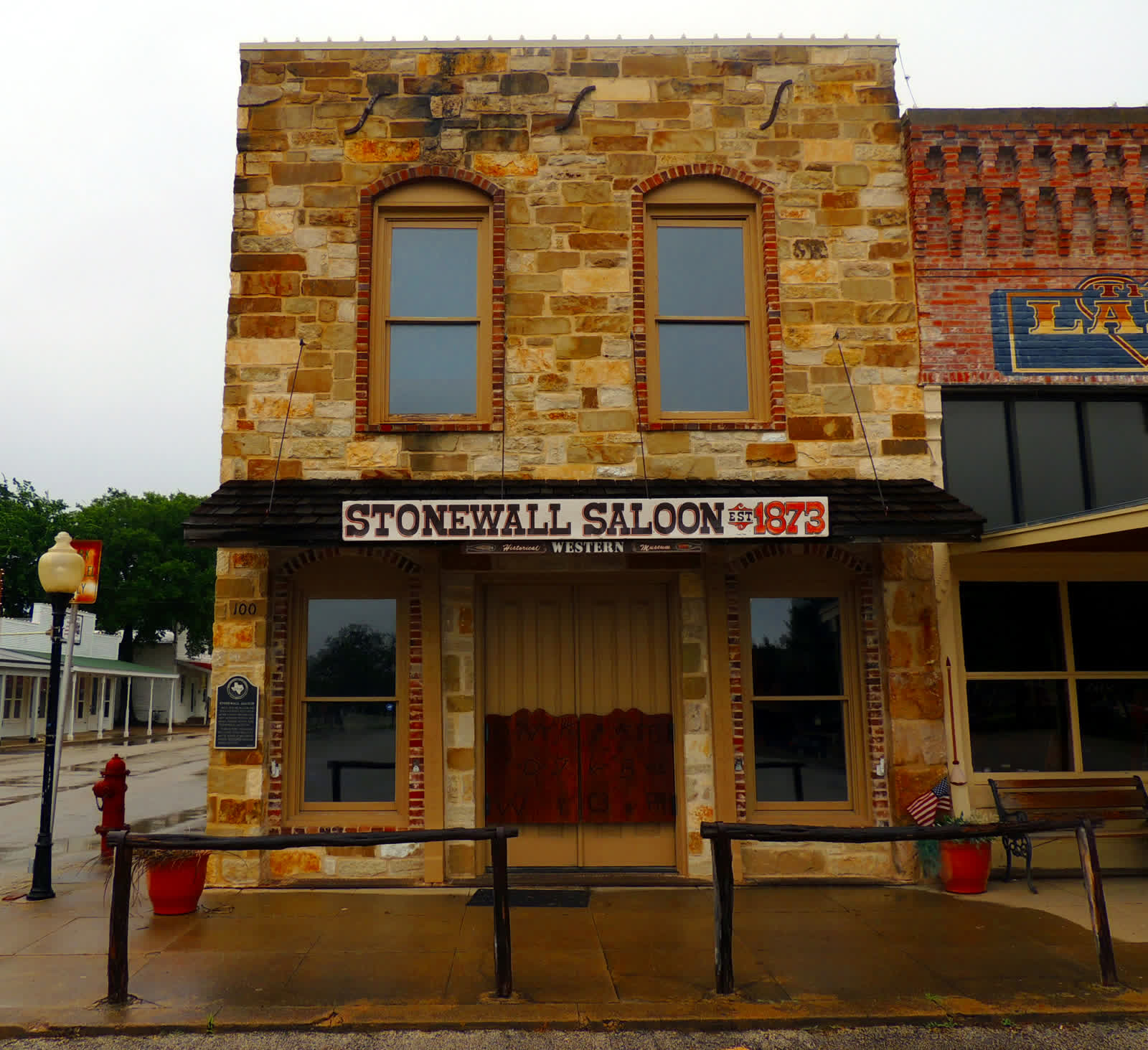
The stone building that houses the Stonewall Saloon Museum was constructed in 1873 as the first permanent structure built in Saint Jo, Texas. The town itself had been founded the previous year — the Singletary twins and early settlers including Joe Howell and Irby Boggess had established the townsite — and the saloon represented the first major commitment to permanence in what would become the Montague County seat of commerce on the western road.
The construction material was deliberate. Frontier-era Texas building was predominantly wood: fast to erect, available from portable sawmills, adequate for a temporary claim. A stone building communicated something different — an investment in permanence, a bet on the town’s survival. The stonework that has preserved the building for more than 150 years was, in 1873, a statement of commercial confidence.
The timing put the Stonewall Saloon at the center of one of the most active periods in Saint Jo’s history. The Chisholm Trail ran through the region, and Saint Jo was a provisioning and rest stop for drovers pushing cattle north to Kansas railheads. The early 1870s were the trail’s peak years — large herds, substantial drover business, and significant commercial traffic passing through small Texas towns that existed, in part, to serve the trade.
The Saloon Years (1873–1899)
A trail-town saloon in the 1870s served multiple economic functions simultaneously. It was a retail establishment selling whiskey and beer to drovers who had been riding under the Texas sun for weeks. It was a gathering place where trail hands exchanged information — which herds were ahead, which river crossings were running high, where the next water was. It was, in the commercial ecology of a cattle-trail town, as essential as the blacksmith and the general store.
The Stonewall Saloon’s reputation in its active decades was regional. Located on the main road through Saint Jo, it served as a stopping point for drovers of the Chisholm Trail era. The period from the saloon’s 1873 construction to the trail’s effective end in the mid-1880s represents the core of its commercial activity — the years when the building was doing precisely what it was designed to do.
Multiple incidents of trail-era violence are associated with the building and the broader Saint Jo commercial strip of the period. These incidents are part of the historical record of Chisholm Trail towns generally; the social environment of a drover stop — armed men, whiskey, significant cash transactions, minimal law enforcement infrastructure — generated conflict with regularity. The Stonewall Saloon was no exception.
The trail’s decline after 1884 — produced by Kansas quarantine laws and the spread of barbed wire — reduced the commercial rationale for the drover-service economy. Saint Jo’s trajectory shifted as the cattle trail faded, and the saloon’s original business model weakened with it. The building closed as a saloon in approximately 1899, as the broader trail-town commercial culture reached its end.
The Dry-City Anomaly
One of the more historically interesting facts about Saint Jo as a Chisholm Trail town involves a commercial paradox: the town operated as a dry city — prohibiting alcohol sales — at various periods, even as it served as a provisioning stop for drovers who expected saloon access. The 1873 saloon’s founding predated some of these restrictions, and the specific legal history of alcohol regulation in Saint Jo through the late 19th and early 20th centuries involves a series of local-option votes that produced the unusual circumstance of a former saloon building operating in a town that had legally prohibited what the building was built to sell.
This tension is a recurring feature of Texas frontier towns: local moral reform movements and Prohibition sentiment collided with commercial infrastructure built for a different economy. The Stonewall Saloon building survived this transition precisely because the stone construction that had given it permanence also gave it adaptability — a building with no wood-rot vulnerabilities and solid structural integrity could be repurposed for new uses as the community’s commercial and legal context shifted.
Various Uses and the 1958 Museum Opening
Between the saloon’s 1899 closure and the building’s 1958 conversion to a museum, it passed through multiple occupancies and uses. The specific history of this period — which businesses operated from the space, what physical modifications were made, and which aspects of the original interior were preserved — is an area where further archival research could add significantly to the documented record.
What is documented: the building was opened as a museum in 1958, a conversion that preserved the building’s character while giving it a new interpretive function. The 1958 date places the museum’s founding in the post-WWII period of heritage consciousness in Texas — a time when organizations and communities were beginning to systematically address the preservation of frontier-era built environment before the last generation with direct memory of those years passed.
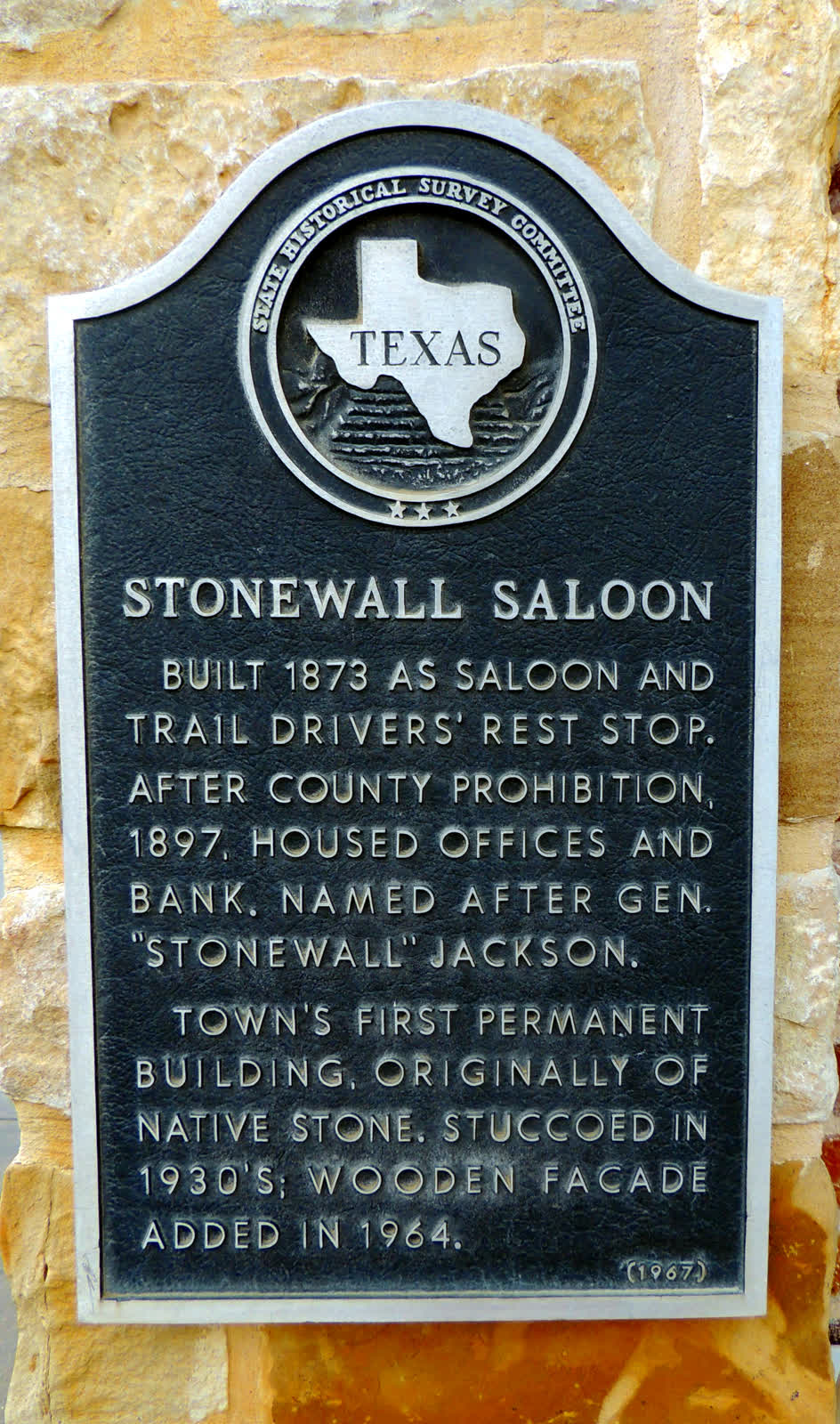
The Texas Historical Commission recognized the site with a historic marker in 1967, providing formal state-level documentation of the building’s significance as a Chisholm Trail-era structure. The marker remains in place and is accessible to visitors.
In 2008, a group of purchasers acquired the property, and in 2011 the institution received nonprofit status — a governance structure appropriate to a community heritage institution operating on volunteer labor and donations rather than commercial revenue.
The Museum Today
The Stonewall Saloon Museum operates as a heritage institution with exhibits covering several interpretive themes:
Saloon-era artifacts document the building’s original commercial function: bar and bar fittings from the frontier period, drover-era equipment including hats, bridles, and tools, photographs of trail-era Saint Jo, and documents and ephemera from the town’s first decades.
Saint Jo town heritage provides context for the broader community: the town founding narrative including the Singletary twins and the early settler figures, the photographic record of Saint Jo through its history, and multi-generational MoCo family stories with deep roots in the western county.
Chisholm Trail history addresses the broader context in which the building functioned: the trail’s route through north Texas, Saint Jo’s specific role as a provisioning stop, the drover experience, and the cattle-trail artifacts that document the industry that built the town.
Native American heritage includes materials on the pre-Anglo context of the region — the indigenous peoples whose territory the trail crossed and whose displacement preceded the cattle-drive era.
The museum is volunteer-staffed, operates on modest admission and donations, and maintains a community role as a cultural anchor for Saint Jo. It serves school and group tours, connects to the broader heritage tourism infrastructure of the county, and occupies the same town square as Saint Jo Trade Days — a synergy that brings heritage visitors and trade-day attendees into contact with the same commercial district.
Preservation and Physical Significance
The Stonewall Saloon building’s significance as a heritage artifact is inseparable from its physical survival. Unlike the log cabins and wooden commercial structures that defined most frontier-era Texas towns — structures that were dismantled, burned, or simply rotted away as their utility passed — the 1873 stone construction has endured for 150 years with its essential character intact.
This is unusual. Very few structures from the Chisholm Trail’s active era survive in functional use. The trail itself was a temporary economic event, not a permanent infrastructure investment, and the towns that served it were built for speed and cheapness rather than durability. Saint Jo’s Stonewall Saloon is the physical exception to this pattern — a commercial building from the trail’s peak years, still standing at its original location, still accessible to visitors who want to stand in a room where drovers drank in 1873.
That physical continuity is the museum’s primary interpretive asset. Exhibits can be recreated; artifacts can be replicated or relocated. The building cannot be recreated. It is the artifact.
Compared to Tales ‘N’ Trails Museum
The Tales ‘N’ Trails Museum in Nocona and the Stonewall Saloon Museum in Saint Jo are complementary rather than redundant. Tales ‘N’ Trails is larger, covers the full range of MoCo’s heritage (leather industry, oil and gas, agriculture, Western heritage, Native American history), and opened in 2010. The Stonewall Saloon is smaller, focused specifically on the Chisholm Trail era and Saint Jo’s particular history, and operates from a building that is itself a primary historical artifact.
Together they represent two approaches to heritage preservation: the purpose-built community museum assembled from artifacts and exhibits, and the original building repurposed as an interpretive site. Both are essential to understanding Montague County’s documented history. Explore all heritage businesses and institutions of Montague County.
Sources
- Stonewall Saloon Museum (stonewallsaloonmuseum.com)
- Texas Historical Commission, Historic Marker: Stonewall Saloon (1967) (thc.texas.gov)
- Portal to Texas History, Stonewall Saloon Museum, Saint Jo, Texas (texashistory.unt.edu)
- TSHA Handbook of Texas, “Saint Jo, Texas” (tshaonline.org)
Photos