Who was Cynthia Ann Parker?
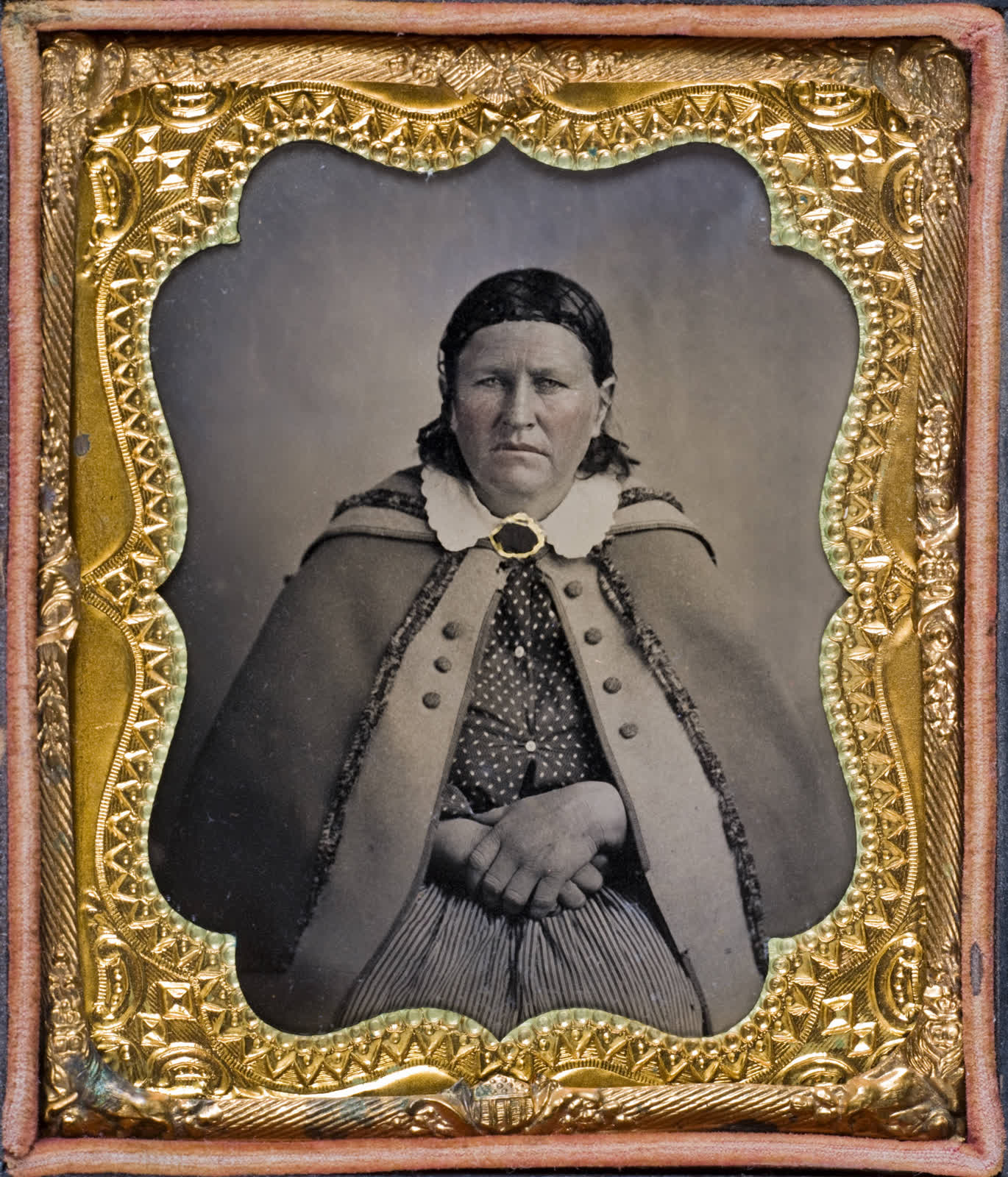
Cynthia Ann Parker — known among the Comanche as “Naduah” or “Nautdah” — was born around 1827, likely in Crawford County, Illinois or Tennessee (sources vary). Her family migrated to Texas in the early 1830s and settled at Fort Parker, a fortified family stockade in Limestone County built by the extended Parker family.
She is one of the most-written-about figures in Texas frontier history. Her story — capture at age nine, 24 years of Comanche life, forced recapture, death in grief — has been the subject of multiple major biographies, novels, and films, including S.C. Gwynne’s Empire of the Summer Moon and Phillip Meyer’s The Son. Her connection to Montague County runs through her husband: the town of Nocona, Texas, the county’s largest city, is named for Peta Nocona, the Nokoni Comanche chief she married.
What happened at Fort Parker in 1836?
On May 19, 1836, a Comanche raiding party — variously estimated at 100 to 500 warriors — attacked Fort Parker while many of the adult men were out at the fields. Multiple Parker family members were killed, including Cynthia Ann’s father Silas Parker. Several people were taken captive:
- Cynthia Ann Parker (age approximately 9)
- John Richard Parker (her younger brother)
- Rachel Plummer (her cousin, who later wrote a captivity narrative)
- Elizabeth Kellogg
- A Plummer infant
Most of the captives were ransomed back to Anglo-Texan family within a few years. John Richard Parker was ransomed in 1842. Cynthia Ann was not. The exact band composition of the 1836 raiders is contested in available sources.
How did Cynthia Ann Parker live among the Comanche?
By the time Cynthia Ann was a teenager, she had adapted fully to Comanche life. She spoke Comanche fluently; her knowledge of Anglo-Texan English faded. She adopted Comanche customs, clothing, and worldview. When Anglo-Texan relatives and agents attempted to ransom her during the 1840s and 1850s — including a documented attempt by her uncle James Parker — she refused to leave.
She married Peta Nocona, chief of the Nokoni Comanche band, in the late 1830s or 1840s (the specific date is not recorded in available sources). Their marriage produced three children: Quanah (born approximately 1845), Pecos, and Topsannah (Prairie Flower, a daughter). As wife of a band chief, she was a respected member of the Nokoni community. By her own consistent behavior, she considered herself Comanche.
For Peta Nocona’s biography and the broader Nokoni band history, see Peta Nocona.
What was the 1860 Pease River incident?
On December 18, 1860, Texas Rangers under Lawrence Sullivan “Sul” Ross attacked a Nokoni Comanche camp on the Pease River in the Foard County area. The camp consisted largely of women, children, and elderly; most warriors were away. Cynthia Ann Parker was captured with her infant daughter Topsannah. She was identified by her blue eyes.
She initially resisted identification, showing loyalty to her Comanche family. Quanah, then approximately 15 years old, escaped the attack and continued his Comanche life. He would go on to become Quanah Parker, the last war chief of the Quahadi Comanche.
What Sul Ross claimed — that he killed Peta Nocona in the attack — is disputed. The man killed appears to have been a Mexican captive raised Comanche. Whether Peta Nocona survived Pease River or died in that attack is a genuinely contested historical question; see Peta Nocona for the full accounting of both positions.
What was Cynthia Ann Parker’s “return” to Anglo-Texan society?
After her recapture, Cynthia Ann Parker was returned first to her uncle Isaac Parker and then to her cousin Silas Parker Jr. She lived in east Texas for the remainder of her life, surrounded by Anglo-Texan family who considered her rescue a triumph.
She did not. She refused to accept Anglo-Texan identity as her own. She mourned her husband, her sons, and her Comanche life. She attempted to escape and return to the Comanche on multiple occasions. Topsannah, the daughter she had brought with her from the Pease River camp, died of disease in 1864. Cynthia Ann died in March 1871 — the cause given in accounts is broken-hearted grief, with some sources describing self-starvation in mourning.
Note on the death date: The TSHA Handbook of Texas and contemporary records indicate March 1871 as the most authoritative date. Some earlier secondary sources give 1864 or 1870. The March 1871 date is used here per TSHA.
Her initial burial was in Anderson County, east Texas. Quanah Parker later recovered her remains and reburied them in Oklahoma. After Quanah’s own death in 1911, both were relocated in 1957 to Fort Sill Post Cemetery when Post Oak Mission Cemetery was cleared for military expansion.
What was Cynthia Ann Parker’s connection to Montague County?
Cynthia Ann’s direct connection to Montague County is through her husband. The town of Nocona, established in 1887, was named for Peta Nocona by its founder D.C. Jordan — embedding the Parker-Nocona family story in the county’s permanent place-name geography. Montague County’s frontier-era history was shaped by Comanche and Nokoni band presence across the northern Texas plains, the same territory where Peta Nocona’s band operated.
The broader Comanche context — the alliances, territorial patterns, and frontier conflict period — is covered in Comanche and Kiowa. For the full People hub, see People of Montague County.
This article draws on the TSHA Handbook of Texas (“Parker, Cynthia Ann” entry), Portal to Texas History, and published secondary sources (Gwynne, Exley, DeShields). All claims about Comanche life, family relationships, and the 1836 raid derive from Anglo-Texan settler, military, and newspaper records unless otherwise noted. Tribal consultation pending — the Comanche Nation holds authoritative knowledge of Nokoni band history and Comanche perspectives on the Parker-Nocona family not yet incorporated here.