For most of Montague County’s first century, rural education meant a single room, a single teacher, and children of every age learning together. Before buses, before consolidated school districts, before the modern academic calendar, the one-room schoolhouse was both the educational infrastructure of rural Texas and a community institution at the center of neighborhood life.
At peak — roughly the first decades of the 20th century — dozens of these schools dotted the county, one for nearly every crossroads, neighborhood, and tenant-farming community. Almost all of them are gone now. Their closure is part of MoCo’s modern history: the story of how the county’s educational landscape transformed from scattered community schools into the six independent school districts that serve the county today.
The One-Room Era
Origins
Texas’s first rural schools were community institutions organized locally, funded partly through the state’s Permanent School Fund (established 1854) and partly through local taxation. The state’s earliest school law had laid the framework, but the practical reality of frontier education depended on communities willing to build a structure, find a teacher, and send their children.
Montague County’s first school was established near Forestburg in 1858 — the same year the county was formally organized. That the community organized education and county government in the same period reflects the settler determination to build civil society at the frontier as quickly as possible.
The pattern repeated across the county through the 1860s, 1870s, and 1880s as settlement expanded: a crossroads community would organize a “common school district,” build a one-room structure from available materials (wood, cedar logs, or eventually frame construction), hire a teacher — typically a young woman boarding with a local family — and open a school year that fit around the agricultural calendar.
What the Schools Looked Like
The physical template was consistent across rural Texas and rural MoCo:
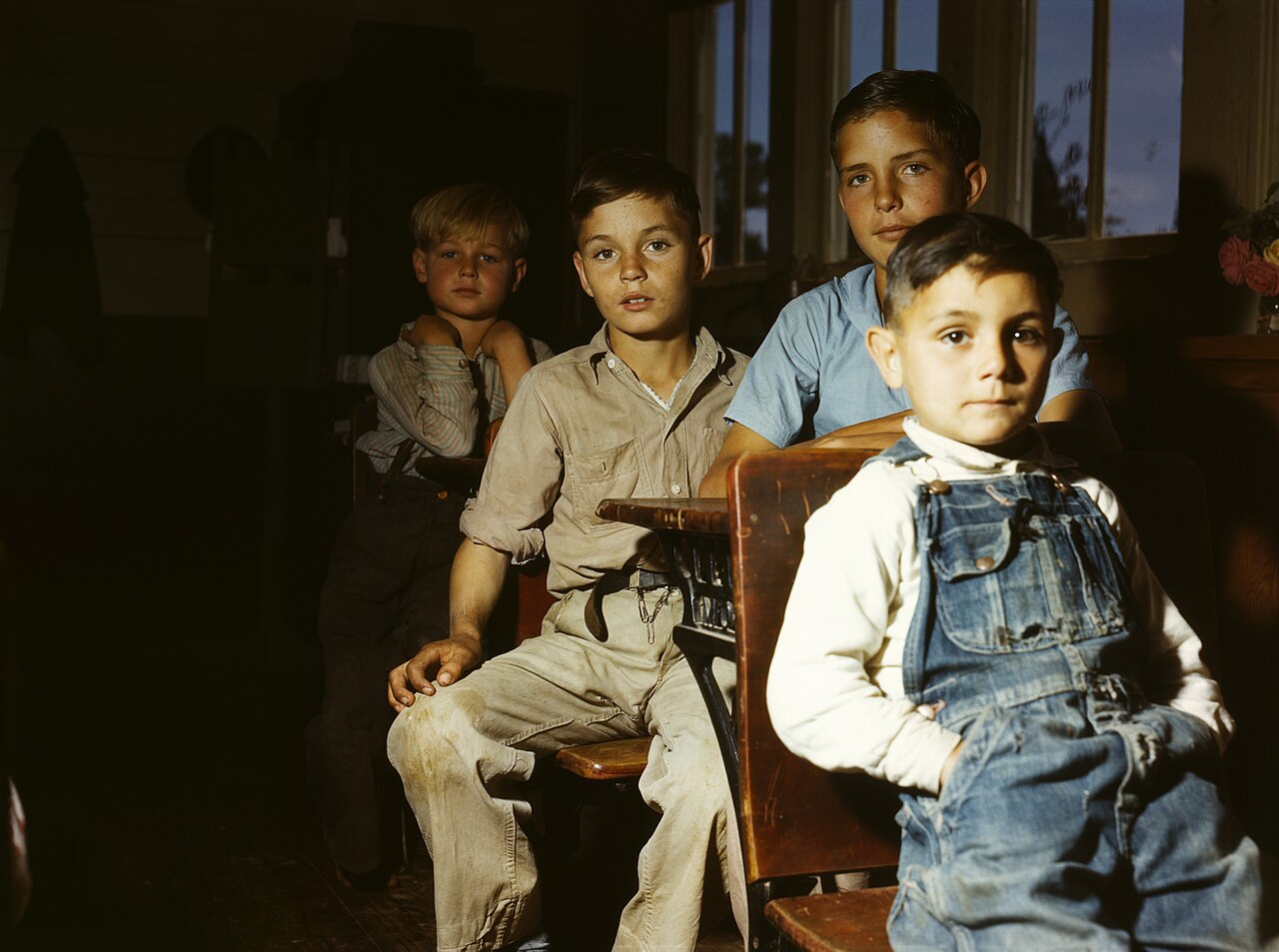
A single large room with student desks, a pot-bellied stove for heat, blackboards at the front, a teacher’s desk, and windows on the south side for natural light. Behind the building, an outhouse. Nearby, a hand pump or well. No electricity — until REA lines arrived in the 1930s and 1940s, rural schools operated entirely on natural light and kerosene.
The teacher managed multiple grades simultaneously — children aged six to fourteen or so, at all stages of reading, arithmetic, geography, and history. Older students helped younger ones; the multi-grade arrangement that looks like a limitation from a modern perspective also produced cross-age teaching relationships that formal grade-separation eliminates.
The Calendar
The academic calendar in cotton-farming communities was shaped by agricultural necessity. Schools typically opened after harvest — October or November — ran through winter, and closed before spring planting in March or April. Cotton-picking season could close a school temporarily if farm labor needs were acute. The modern August-through-May calendar came with consolidation, when students were no longer expected to work the fields on their families’ schedule.
The Teacher
Rural schoolteachers in early 20th-century MoCo were often women in their late teens or early twenties, newly certificated, boarding with a local family during the school year. Salaries were modest — sometimes paid partly in produce or supplies rather than cash. The social position was respected but constrained: teachers were expected to maintain community standards, avoid controversy, and manage their classrooms firmly. Corporal punishment was the norm, and the teacher’s authority over a room of children ranging from first-graders to teenagers required a particular kind of confident competence.
Many teachers from this era are remembered with genuine warmth in family oral tradition — the young woman who stayed for three years and taught a generation of siblings, the teacher who brought a small library from home because the school had almost none. Others are remembered for the switch.
Specific Schools: What We Know
Forestburg’s First School and the 1937 WPA Building
The most continuously documented school history in Montague County belongs to Forestburg. The county’s first school — established near the community in 1858 — passed through multiple iterations over the following decades. The most architecturally notable structure was built in 1937 through the Works Progress Administration (WPA): a stone building designed in the style of the Alamo, a choice that gave the school a visual distinction it has not lost.
The 1937 building was destroyed in a 1995 fire and rebuilt in 1996. Forestburg ISD continues to operate today, making it one of the county’s longest-running school institutions in a single location. See WPA and CCC in Montague County for the broader New Deal public-works context.
The Common School Districts
Before consolidation created the modern independent school districts, Montague County contained numerous “common school districts” — small administrative entities, each with its own school board, its own one-room (or occasionally two-room) building, and its own attendance zone covering a few square miles of rural land.
These districts were named for nearby communities, families, or geographic features: a creek, a ridge, a prominent family that had donated land. Some of the names survive in the landscape as informal place-names — “Old Hardy School area,” “the Macedonia school corner” — even when the building itself has been gone for sixty years.
A comprehensive inventory of MoCo common school districts — with names, locations, dates of operation, and building status — is an outstanding research priority. The Texas Education Agency’s historical records, the Montague County Historical Commission, and the county clerk’s archives are the primary sources for this work.
Consolidation: How the One-Room Era Ended
Why Consolidation Happened
The arguments for school consolidation were real and accumulated over decades:
Educational standards: A single teacher covering all grades in all subjects had limits. Consolidated schools could offer specialized teachers, a broader curriculum, and higher academic expectations.
Cost efficiency: One larger school was cheaper to operate, heat, and staff than five or ten small ones — a calculation that became more compelling as rural populations declined and small schools fell below viable attendance thresholds.
Transportation: The arrival of school buses in the 1920s and 1930s made it practical to transport students from rural areas to a central school. The standard yellow school bus — orange-yellow adopted as the national standard in 1939 — replaced the assumption that children would walk to a nearby school.
Population shift: Rural depopulation through the 1920s and 1930s reduced the number of children in many common school districts below the level that justified a separate school. The Dust Bowl and Depression years accelerated the process.
The Consolidation Timeline
Texas moved aggressively toward school consolidation in the 20th century. The state had roughly 7,000 school districts in the early 1900s; it has approximately 1,000 today. The major consolidation waves hit in the 1920s, the 1940s and 1950s, and the 1960s, each driven by a combination of state policy, economic pressure, and population change.
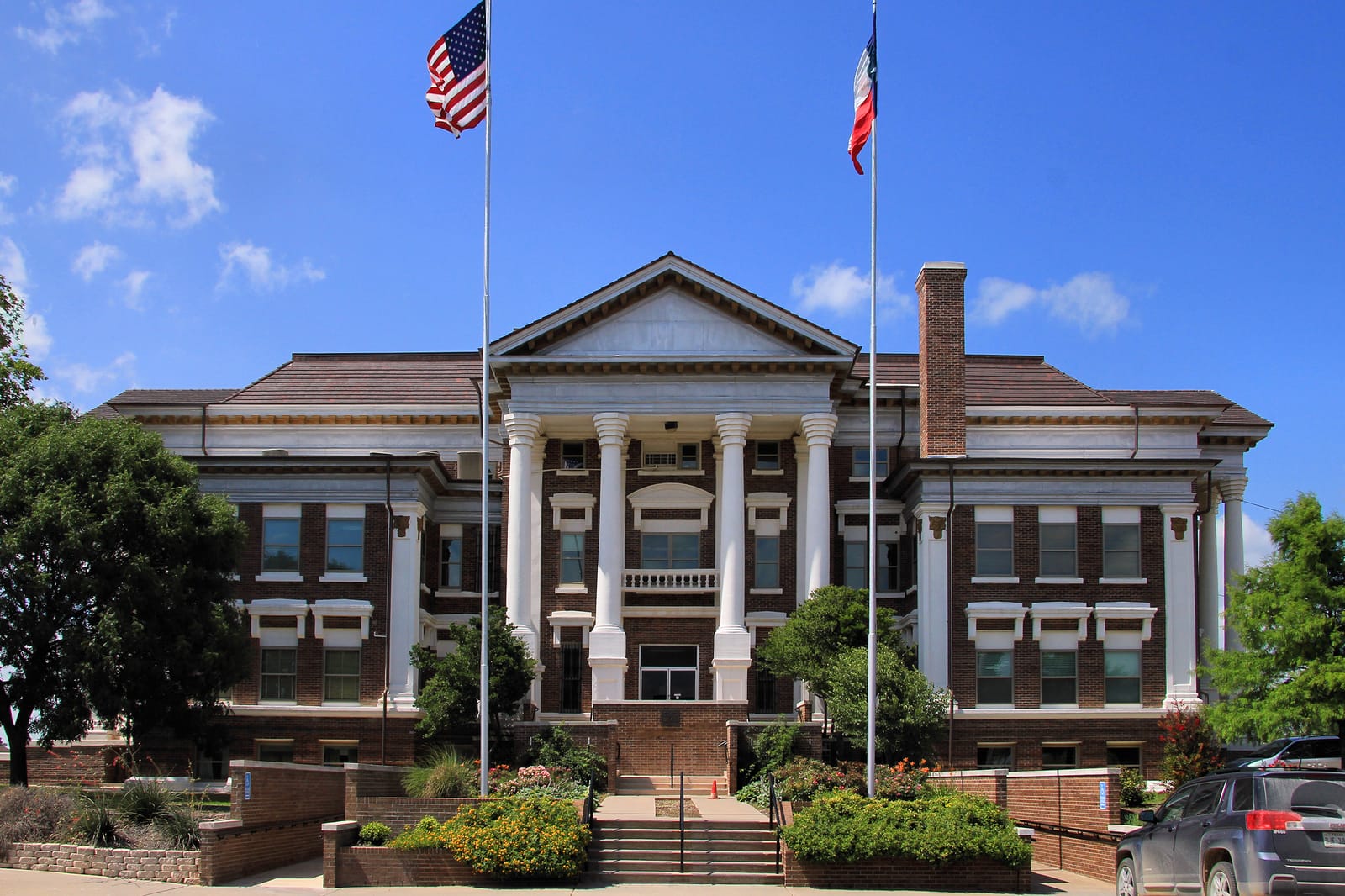
In Montague County, consolidation produced the six independent school districts that currently serve the county:
- Bowie ISD — serving the county’s largest town and surrounding areas
- Nocona ISD — serving the county seat area and northeast MoCo
- Saint Jo ISD — serving the northwest
- Forestburg ISD — serving the southeast, the county’s longest-running school location
- Gold-Burg ISD — consolidated from earlier common school districts
- Prairie Valley ISD — serving rural central MoCo
Each of these districts absorbed the common school districts that had operated in their service areas, and most of the one-room buildings that had formed those districts were sold, converted, or left to decay.
What Survived
Surviving Structures
Some former schoolhouse buildings remain standing in Montague County, repurposed or simply persisting:
- Community centers — several former school buildings became meeting places for civic groups or rural congregations
- Private residences — some structures were sold and converted to homes
- Storage buildings — some serve utilitarian purposes on working farms
- Historic markers — a few sites are marked even where the building is gone
The Forestburg WPA school (rebuilt 1996) is the most prominent example of a preserved — and rebuilt — MoCo schoolhouse with a documented history.
A systematic inventory of surviving or historically documented MoCo schoolhouse structures is an outstanding research priority with the Texas Historical Commission and the Montague County Historical Commission.
The Cultural Legacy
Memory
Montague County residents born before approximately 1950 often carry direct memory of one-room schoolhouses — their own, or their parents’. Family photograph albums from the first half of the 20th century commonly include school group portraits: thirty children in front of a weathered frame building, the teacher standing off to one side.
Reunions of former students at old school sites were a feature of MoCo community life through the late 20th century, particularly for schools that closed in the consolidation waves of the 1940s and 1950s. Some continue.
What Was Lost and What Was Gained
Honest assessment of the one-room era requires holding two truths simultaneously. The consolidation that ended it was genuinely beneficial in many respects: better facilities, more subjects, more qualified teachers, more social diversity. The MoCo children who attended Bowie ISD in 1960 had educational opportunities their grandparents’ one-room schoolhouses could not have provided.
At the same time, something real was lost. The one-room school was a neighborhood institution — a place where the children of a specific rural community learned together, where the teacher knew every family in the district, where education was visibly connected to the community it served. The long bus rides that replaced the short walks to the schoolhouse created a different kind of school experience, more connected to the broader world and less embedded in the specific place.
MoCo’s one-room schoolhouses were imperfect institutions in an imperfect era — they excluded Black students entirely under segregation, served the children of the documented community while ignoring farm labor children who moved seasonally, and offered highly variable quality depending on who the teacher happened to be. The nostalgia that attaches to them in family memory is real, and so are their limitations.
Related pages: WPA and CCC in Montague County · Modern Era Index
Sources: TSHA Handbook of Texas, “Education” (tshaonline.org/handbook/entries/education); towns/forestburg.md cross-reference (first school 1858; WPA building 1937; 1995 fire; 1996 rebuild). Comprehensive inventory of MoCo common school districts and consolidation timeline remain outstanding research questions (TEA AskTED; Montague County Historical Commission).