For roughly three decades, cotton was the economic engine of Montague County. The crop transformed a frontier cattle economy with fewer than 1,000 residents in 1880 into a cotton-and-railroad society of more than 25,000 residents by 1910 — a 28-fold increase in a single generation. Railroads, banks, gins, schools, and churches followed the acreage. Towns grew at every rail point. The cotton era is the moment when Montague County became a settled, complex rural society. It is also the moment that made the collapse that followed so devastating.
Cotton Expands into MoCo
Before the cotton boom, Montague County was:
- Population: 890 by 1880, essentially flat from the frontier conflict era
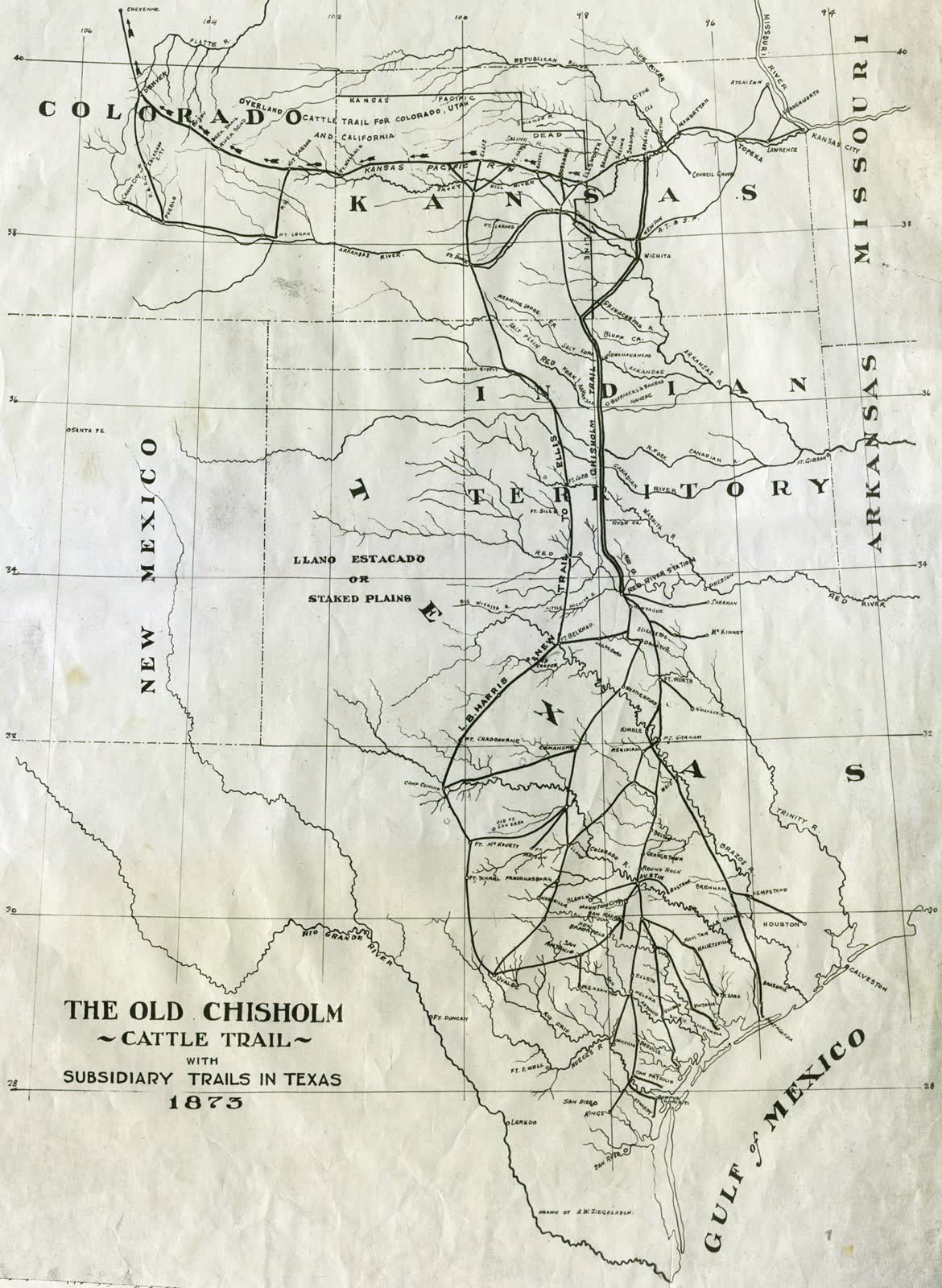
- Economy: cattle drives, with Red River Station and Saint Jo as the principal trail towns
- Agriculture: subsistence farming, with approximately 4,000 bales of cotton on roughly 11,000 acres in 1880
That baseline transformed almost immediately when the Fort Worth and Denver Railway reached Bowie in 1882. The railroad was the decisive change. Cotton that had been too expensive to move to market became profitable overnight. The Chicago, Rock Island and Texas Railway followed in 1893, reinforcing Bowie’s position as the county’s principal shipping hub.
MoCo’s soil mix — sandy loam uplands in the Cross Timbers, alluvial bottom land along river corridors, more than 210 frost-free days — was adequate for cotton, if not as productive per acre as the Blackland Prairie counties to the east. What the county lacked in soil richness it compensated with available land and willing settlers. Cotton-experienced families from the older South arrived in substantial numbers through the 1880s and 1890s. By 1900, cotton acreage had grown from roughly 11,000 acres to approximately 78,000 acres. By 1914, the county harvested 43,595 bales — a county record that has never been matched.
Tenant Farming
The cotton economy that produced those peak bale counts rested on a particular labor and land structure that defined daily life for most MoCo cotton families.
By the early 1900s, a large fraction of the county’s cotton farmers were tenant farmers — renting land for cash or for a share of the crop — or sharecroppers — paying landowners with a portion of the harvest. The pattern reflected the broader Southern cotton-economy structure. Land had been consolidating in fewer hands since the 1870s; the cotton boom accelerated that process as capital requirements for productive operations grew beyond what most farm families could sustain with land of their own.
The economic mechanism that governed tenant life was the crop lien: country merchants advanced seed, food, and supplies on credit, secured by the coming harvest. Settlement came at fall ginning, when farmers sold cotton to repay the merchant’s advance. Interest rates on credit accounts were higher than for cash; harvest-season cotton prices were often lower than at other times, because merchants and buyers understood that indebted farmers needed to sell immediately. The crop lien system trapped many tenant families in a cycle that left little margin for anything to go wrong — and in MoCo’s cotton years, things went wrong regularly.
African-American Labor
The documentary record for this era is drawn primarily from Montague County courthouse records — deeds, probate filings, tax rolls, gin tickets, and bank ledgers — sources that systematically recorded the interests of landowners and creditors and documented tenant farmers, sharecroppers, and field hands imprecisely or not at all. That recording pattern is especially pronounced for Black agricultural workers.
MoCo’s African-American population was small relative to east Texas cotton counties. The 34 enslaved persons recorded in the county in 1860, the documented sundown-county patterns of the post-Reconstruction era, and the violence that attended Black political participation in the region all suppressed Black settlement and labor participation in MoCo’s cotton economy. But “small” does not mean absent. African-American cotton workers — tenant farmers, sharecroppers, field hands — participated in the county’s cotton production in ways that surviving records undercount.
The absence of named Black workers in available sources is partly demographic and partly archival: courthouse records and TSHA secondary sources did not document African-American agricultural families with the same regularity they documented white landowners. An outstanding research question is the full scope of African-American labor in the county: the Freedmen’s Bureau Records at NARA (RG 105, Microfilm Publication M1912) available via the NMAAHC Freedmen’s Bureau Search Portal and at the National Archives in Fort Worth hold labor contracts and household records from the Reconstruction-era Gainesville sub-district closest to MoCo. A companion page treating African-American history in Montague County in full is in research; until it is published, the documentary gap stands.
The Broader Labor Picture
Cotton production at the 1914 peak — 43,595 bales, processed through 40 gins across the county — required the sustained physical labor of thousands of people whose names do not appear in production statistics. Three labor categories deserve explicit acknowledgment.
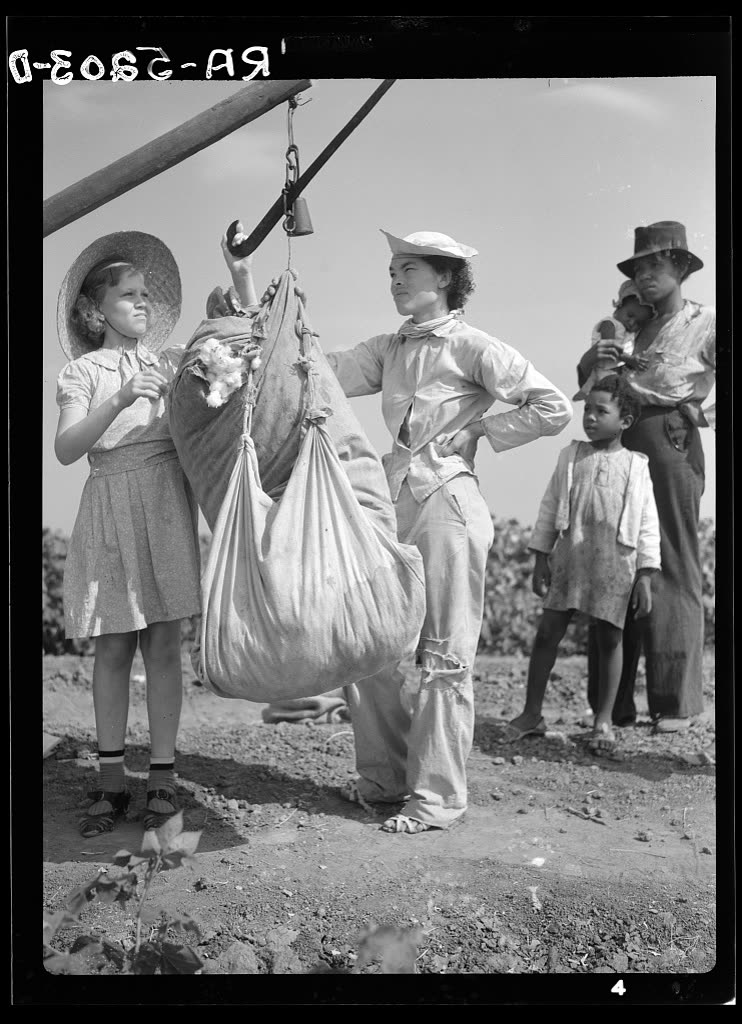
Women’s labor: “Family labor” in cotton meant the entire household, including women and girls, working through the chopping and picking season. Women picked cotton alongside men, managed household food production through the growing season, and in tenant households often determined whether the family cleared its crop lien with their own picking productivity. The framing of “family labor” as gender-neutral obscures women’s specific economic role.
Hispanic and migrant labor: The structural pattern of Hispanic labor in Texas cotton — documented by Neil Foley in The White Scourge (2000) and David Montejano in Anglos and Mexicans in the Making of Texas (1987) — included counties across north-central Texas. Whether and at what scale Hispanic agricultural workers participated in MoCo’s cotton economy requires primary research at the Catholic Diocese of Fort Worth sacramental archives and Census manuscript records at TSLAC. Named Hispanic farming families in MoCo’s cotton era have not yet been documented from available sources.
Children’s labor: Cotton school calendars accommodated the harvest cycle; children were significant participants in field work, particularly during the picking season when labor demand peaked.
The Cotton Year
The agricultural rhythm of cotton farming organized life in MoCo from the 1880s through the 1930s:
Spring (March–May): Land preparation, planting. Cotton went into the ground in late April. Plowing and harrowing preceded planting; the cotton year began with debt and hope in roughly equal measure.
Summer (June–August): “Chopping cotton” — hand hoeing to thin plants and remove weeds, multiple passes through the summer heat. The most physically demanding cultivation phase.
Fall harvest (September–November): “Picking cotton” — hand picking of opened bolls, multiple passes because cotton matured unevenly. Hauling to gin, ginning, baling, shipping. The most labor-intensive period; the gin yards were social centers as much as processing points, with farmers waiting in wagon lines exchanging news.
Winter (December–February): Limited cash income. Hog killing and food preservation. Children attended school in the periods of lowest farm labor demand.
Saturday trade days in county towns — farmers driving in for goods, news, and cotton sales — sustained a merchant economy visible in every MoCo town through the cotton peak and into the memory of residents alive today.
The Boll Weevil and the Collapse
The boll weevil reached Montague County around 1910, beginning the long unwinding of the cotton economy. The 1914 peak (43,595 bales) was achieved despite weevil pressure, on a surge of wartime demand and maximum acreage. After 1914, no year matched that production. Post-1920s yields typically ran at roughly 20% of peak — under 9,000 bales — and continued declining as the combination of pest damage, Depression-era price collapse, and Agricultural Adjustment Act acreage reduction programs drove cotton withdrawal.
For the boll weevil’s specific mechanisms and timeline, see The Boll Weevil Crisis. For the Depression-era population collapse and its aftermath, see The Dust Bowl and Great Depression in Montague County.
Population tracked the cotton decline:
- 1910: 25,122 (peak)
- 1930: approximately 22,000
- 1940: 20,442 (Census Bureau)
Tenant and sharecropper families left first, having no land equity to fall back on. Small landowners followed. Migration ran to Texas cities — Wichita Falls, Fort Worth, Dallas — and, during the 1930s, further afield to California.
The Legacy
The physical and cultural marks of the cotton era remain across Montague County:
Road patterns that connected farms to gins still define rural MoCo’s road network. Town locations at railroad points — Bowie, Nocona, Saint Jo, Sunset — were set by cotton-era economics and have persisted through subsequent economic changes. Land ownership patterns that emerged from cotton-era consolidation shape the current distribution of rural land.
The county’s diversification into cattle, hay, orchards, and watermelons in the decades after the cotton collapse — documented in the companion pages on Apple and Peach Orchards, Watermelons, and Cotton Gins — is the direct agricultural successor to the cotton era’s collapse. What looks like agricultural variety today was, in its origins, a survival adaptation.
The cotton era was Montague County’s first economic boom and its first economic bust. The boom lasted three decades; the bust has never fully reversed. The 2020 population of Montague County stands at approximately 20,000 — roughly the same as the population the county reached after cotton’s collapse. The cotton era built more than that, briefly. What it also built was the lesson, encoded in family memory and in the county’s subsequent agricultural caution, that single-crop economies carry single-crop risks.
Related pages: The Boll Weevil Crisis · The Dust Bowl and Great Depression · Cotton Gins of Montague County · Cattle-Cotton-Oil Era Index
Sources: TSHA Handbook of Texas (Montague County entry, Cotton Culture entries); U.S. Census Bureau population data; USDA Census of Agriculture historical data. African-American labor history: NARA RG 105 M1912 (Freedmen’s Bureau Records, Gainesville sub-district). Hispanic labor context: Neil Foley, The White Scourge (2000); David Montejano, Anglos and Mexicans in the Making of Texas (1987).